Le ravissement de Lol V.Stein
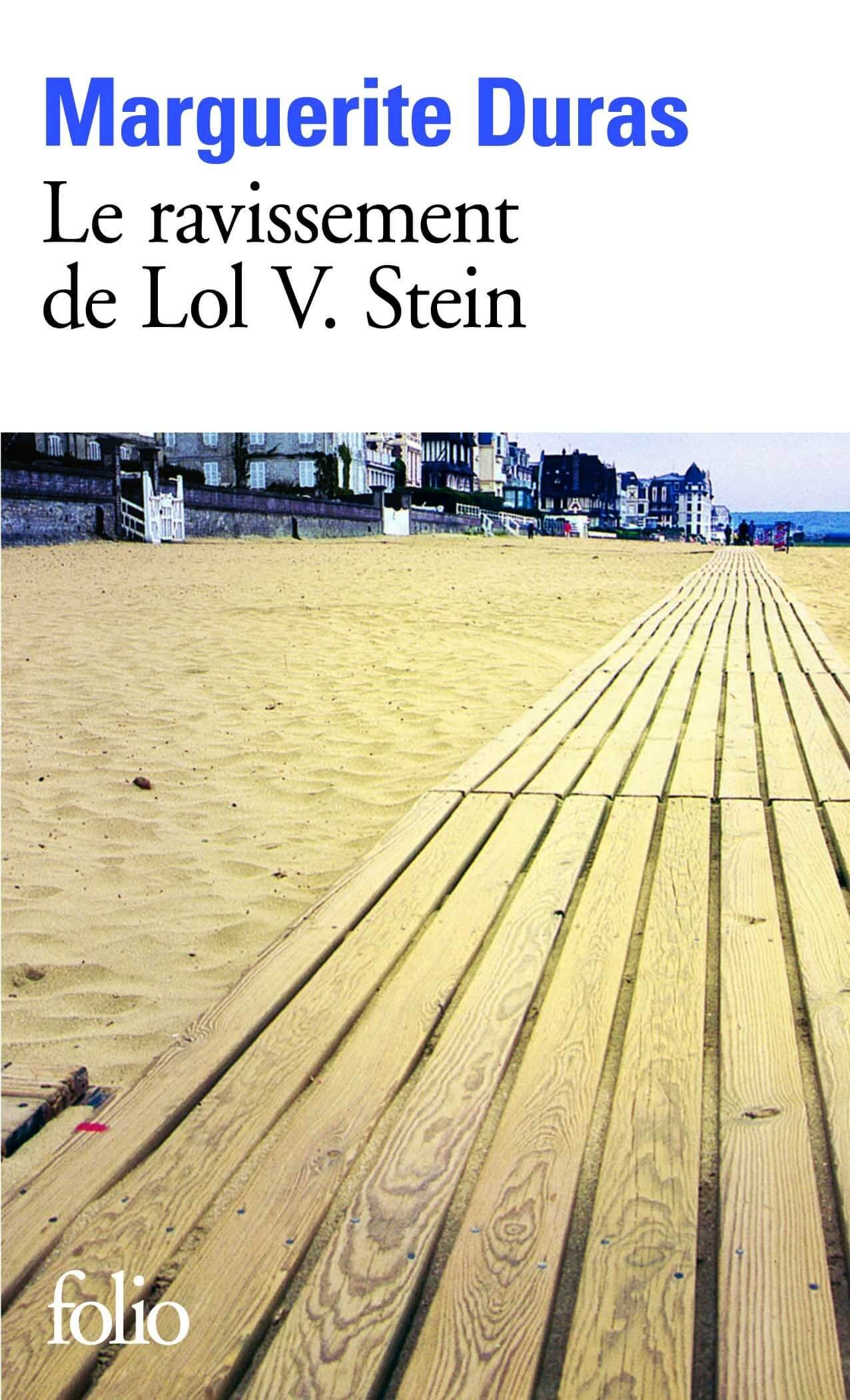
Lol Stein is a beautiful young woman, securely married, settled in a comfortable life--and a voyeur. Returning with her husband and children to the town where, years before, her fiance had abandoned her for another woman, she is drawn inexorably to recreate that long-past tragedy.
La tulipe noire
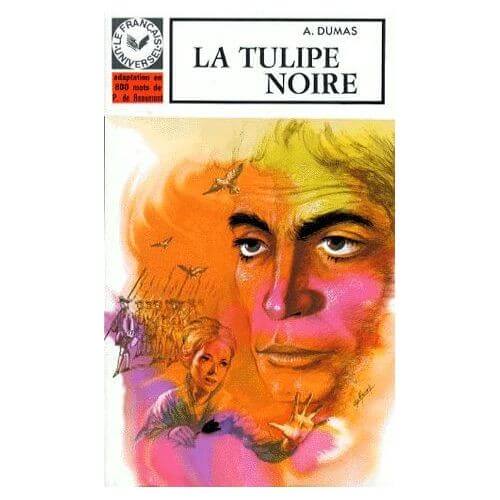
Cornelius von Baerle, a respectable tulip-grower, lives only to cultivate the elusive black tulip and win a magnificent prize for its creation. But after his powerful godfather is assassinated, the unwitting Cornelius becomes caught up in deadly political intrigue and is falsely accused of high treason by a bitter rival. Condemned to life imprisonment, his only comfort is Rosa, the jailer's beautiful daughter, and together they concoct a plan to grow the black tulip in secret. Dumas' last major historical novel is a tale of romantic love, jealousy and obsession, interweaving historical events surrounding the brutal murders of two Dutch statesman in 1672 with the phenomenon of tulipomania that gripped seventeenth-century Holland
La dame de Monsoreau I
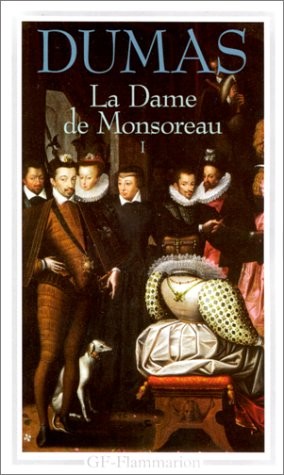
La Dame de Monsoreau is a novel by Alexandre Dumas, père. The novel is concerned with fraternal royal strife at the court of Henri III. Tragically caught between the millstones of history are the gallant Count de Bussy and the woman he adores, la Dame de Monsoreau. Chicot the Jester is a character in the novel, and in some English translations he is the title character. The character of Chicot is impossible not to love, he is both a warrior and comedian, making jokes at his opponents dispense as he runs his sword through them. Even the King is fair game for Chicot. The unique thing about this book is that there are actually two protagonists in the story and several antagonists, giving the reader plenty of emotions toward the different characters.
Les trois mousquetaires vingt ans après
Time, dear friend, time brings round opportunity; opportunity is the martingale of man. The more we have ventured the more we gain, when we know how to wait
Moderato Cantabile
A distressed young man murders the woman he loves in a café, watched by a large crowd. Fascinated by the crime she has witnessed, Anne
Desbaresdes returns several times to the scene, forming a relationship with a man who also saw the murder, and drinking through the
afternoon with him as he patiently answers her eager questions. Slowly, they find themselves being taken over by forces which threaten
their own stability.
Moderato Cantabile is a carefully woven tapestry of emotion, in which the characters' inner lives are reflected by the story's spaces and
landscapes.
L'amant
Set against the backdrop of French colonial Vietnam, The Lover reveals the intimacies and intricacies of a clandestine romance between a pubescent girl from a financially strapped French family and an older, wealthy Chinese-Vietnamese man
L'absente
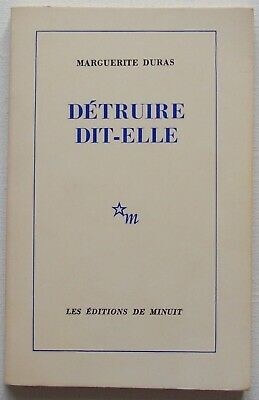
Détruire dit-elle
Floating in ambiguity, three guests at a hotel that may be a sanitarium that may be some kind of waiting area just outside the next world that may be the most unremarkable of vacation spots -- three guests become obsessed with a fourth, and attempt to draw her into their company/game/world/madness, under the sound of unseen tennis courts. Just beyond, the woods, always the woods, a lure, a threat, a veil, a plot unfulfilled but tantalizing. Duras is at great pains here to create, despite her very specific sense of urgency, as open and destabilized a narrative as she can. Without directly contradicting herself, she constantly inclines her characters away from obvious resolution: of the four, it's the only one that we actually know to be convalescing who seems least trapped by the place, who retains the most connection to the outside world, and the least to the others. On the other hand, it's the only character that we actually get to see arrive from the outside, not a patient or guest, that is referred to by the others as insane. And like sleep-walkers, they spiral around and around eachother, under the sun and sound of the tennis courts, on the edge of the wood that none quite seem able to enter or pass through.
L'été 80
In true Duras style, the main story treats the relationship between a nameless female protagonist and a rather silent little boy who spends his holidays at the seaside (and who doesn't seem to have any parents, but hey, fuck it, it's fiction any way). A rather peculiar sort of love takes hold of the woman, as she spends more and more time with the little boy. Their love, her love, his love, is of course bound to fail, and the text constantly flirts with what defines happiness and what defines pain (and, more importantly, how the two relate to each other). In the words of the female protagonist;
La maladie de la mort
A man hires a woman to spend several weeks with him by the sea. The woman is no one in particular, a "she," a warm, moist body with a beating heart-the enigma of Other. Skilled in the mechanics of sex, he desires through her to penetrate a different mystery: he wants to learn love. It isn't a matter of will, she tells him. Still, he wants to learn to try . . .This beautifully wrought erotic novel is an extended haiku on the meaning of love, "perhaps a sudden lapse in the logic of the universe," and of its absence, "the malady of death." "The whole tragedy of the inability to love is in this work, thanks to Duras' unparalleled art of reinventing the most familiar words, of weighing their meaning."
Emily L.
A British couple is stranded in a small French seaport waiting for their yacht to be repaired. They frequent the same bar every evening.
The story is told from the point of view of a French couple who visit the same bar every night and see the British couple.
But the story is told through a smoky haze and an alcoholic fog: everything they “learn” about the British couple (they never actually
talk with them) is partly glimpsed, half heard, probably misconstrued, perhaps mistaken. The French couple begins to invent a life story
for the British couple from these bits and pieces they hear and from the gossip of the bar maid.
L'amante anglaise
A short novel written entirely in dialogue, Duras structures everything around three confrontational 'interviews' surrounding the gruesome
murder of a deaf woman in rural France. Like her other books, there isn't a 'plot' per se, just a tense, emotionally charged situation
which she revolves obsessively around, slowly whittling away at the psychological obsessions and hang-ups of the people involved.
If you only enjoy fiction that develops and resolves in clear, succinct ways, this is probably not to your taste. Duras is interested here
in charting out the twisted emotions, and the unspeakable bitterness and disappointment that accompany small-town life. While it didn't
blow me away quite as much as 'The Lover' did, I think it's still hauntingly successful. If you like your french literature full of erotic
darkness and inner damage, you will treasure it.
American Psycho
Patrick Bateman is twenty-six and he works on Wall Street, he is handsome, sophisticated, charming and intelligent. He is also a psychopath. Taking us to head-on collision with America's greatest dream—and its worst nightmare—American Psycho is bleak, bitter, black comedy about a world we all recognise but do not wish to confront.
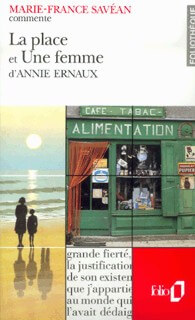
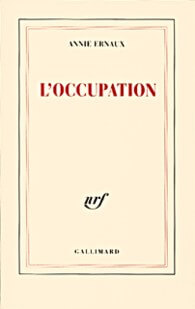
L'occupation
Self-regard, in the works of Annie Ernaux, is always an excruciatingly painful and exact process. Here, she revisits the peculiar kind of self-fulfillment possible when we examine ourselves in the aftermath of a love affair, and sometimes, even, through the eyes of the lost beloved.
J'étais derrière toi
Here is a story of self-discovery, of entering adulthood and of freeing oneself. The tone is sarcastic, lucid, cruel yet realistic. On a background of R&B and funky electronic music, Nicolas argues gives us an impressive and subtle account of relations between the sexes and of examining the choices one has made in the past.
Justine
Le quatuor d'Alexandrie
The time is the eve of the Second World War. The place is Alexandria, an Egyptian city that once housed the world's greatest library and whose inhabitants are still dedicated to knowledge. But for the obsessed and purblind characters in this mesmerizing first novel of the Alexandria Quartet, the pursuit of knowledge leads to no library, only to the bedrooms in which each seeks to know - and possess - the other. Since its publication in 1957, "Justine" has inspired an almost religious devotion among readers and critics. It is not so much a book as it is a self-contained universe, constructed by one of the most elegant and formidably intelligent minds in contemporary fiction.
Cléa
Le quatuor d'Alexandrie
The magnificent final volume of one of the most widely acclaimed fictional masterpieces of the postwar era.
Few books have been awaited as eagerly as Clea, the sensuous and electrically suspenseful novel that resolves the enigmas of the
Alexandria Quartet. Some years and one world war was after his bizarre liaisons with Melissa and Justine, the Irish �migr� Darley becomes
enmeshed with the bisexual artist Clea. That affair not only changes the lovers, it transforms the dead as well, revealing new layers of
duplicity and desire, perversity and pathos in Lawrence Durrell's masterly construction.
Les grandes blondes
A French television producer putting together an affectionate documentary series about famous show business blondes hires a detective agency to track down one of his personal favorites--a singer named Gloria Stella, whose brief burst of fame was cut short when she was jailed for pushing her lover off a roof. Now Gloria has changed her name and her appearance, she hides out in seedy seaside town and is quietly going crazy. That's the endearing premise of this wry and offbeat thriller written by popular French author Jean Echenoz and translated with perfect pitch by Mark Polizzotti. If you'd like to see what thriller readers in other countries are getting excited about these days, here's an easy way into another culture
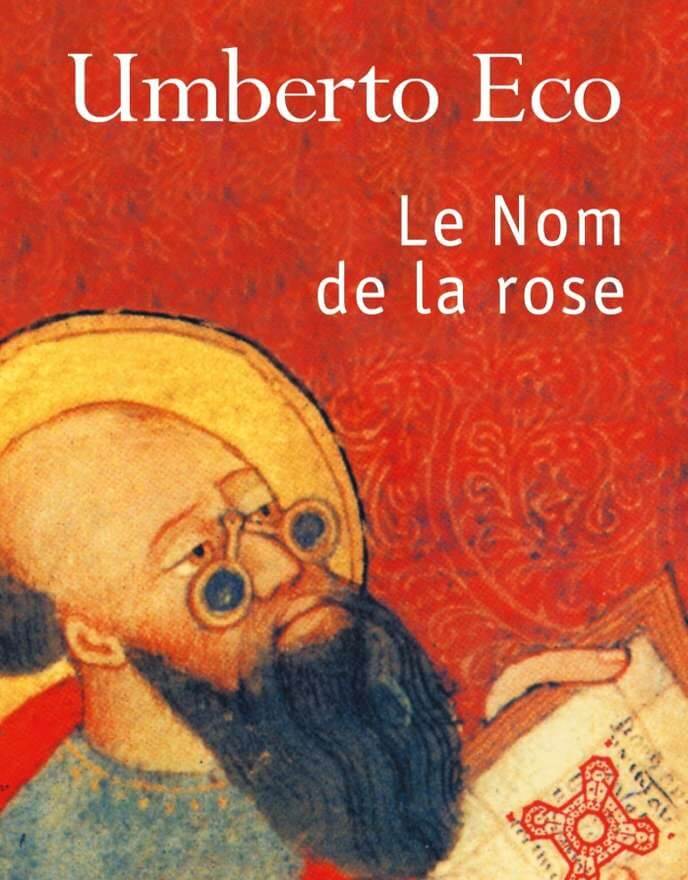
Le nom de la rose
The year is 1327. Benedictines in a wealthy Italian abbey are suspected of heresy, and Brother William of Baskerville arrives to investigate. When his delicate mission is suddenly overshadowed by seven bizarre deaths, Brother William turns detective. His tools are the logic of Aristotle, the theology of Aquinas, the empirical insights of Roger Bacon—all sharpened to a glistening edge by wry humor and a ferocious curiosity. He collects evidence, deciphers secret symbols and coded manuscripts, and digs into the eerie labyrinth of the abbey, where “the most interesting things happen at night.”
Au pays du p'tit
I teach sociology at univeristy and I am 44 years old. I recently published a harsh criticism on French culture and customs and I do not care about anything in life. Except, maybe, women and travel. I say maybe because it's not loving women than playing with their feelings just to fill a predator's appetite. As for travels, if it's hating my own country that I do it, I can't see the point of doing it anyway.
Les armoires vides
Cleaned Out tells the story of Denise Lesur, a 20-year-old woman suffering the after-effects of a back-alley abortion. Alone in her college dorm room, Denise attempts to understand how her suffocating middle-class upbringing has brought her to such an awful present. Ernaux, one of France's most important contemporary writers, daringly breaks with formal French literary tradition in this moving novel about abortion, growing up, and coming to terms with one's childhood.
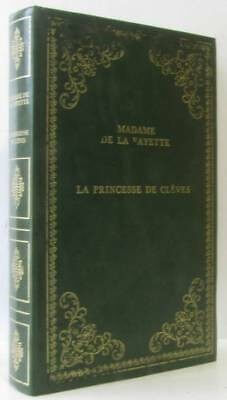
La princesse de Clèves
La princesse de Montpensier
La Princesse de Clèves : Poised between the fading world of chivalric romance and a new psychological realism, Madame de Lafayette's novel of passion and self-deception marks a turning-point in the history of the novel. When it first appeared—anonymously—in 1678 in the heyday of French classicism, it aroused fierce controversy among critics and readers, in particular for the extraordinary confession which forms the climax of the story.
La princesse de Montpensier:young beautiful woman falls in love with a noble man, but she is already in an arranged marriage. She never does anything more than exchange letters with him, but this is enough to make her husband mad with jealousy
Charlotte Gray
From the bestselling author of Birdsong comes Charlotte Gray, the remarkable story of a young Scottish woman who becomes
caught up in the effort to liberate Occupied France from the Nazis while pursuing a perilous mission of her own.
In blacked-out, wartime London, Charlotte Gray develops a dangerous passion for a battle-weary RAF pilot, and when he fails to return from a
daring flight into France she is determined to find him. In the service of the Resistance, she travels to the village of Lavaurette, dyeing

her hair and changing her name to conceal her identity. Here she will come face-to-face with the harrowing truth of what took place during
Europe's darkest years, and will confront a terrifying secret that threatens to cast its shadow over the remainder of her days. Vividly
rendered, tremendously moving, and with a narrative sweep and power reminiscent of his novel Birdsong, Charlotte Gray confirms
Sebastian Faulks as one of the finest novelists working today.
Pylône
One of the few of William Faulkner’s works to be set outside his fictional Yoknapatawpha County, Pylon, first published in 1935, takes place at an air show in a thinly disguised New Orleans named New Valois. An unnamed reporter for a local newspaper tries to understand a very modern ménage a trois of flyers on the brainstorming circuit. These characters, Faulkner said, “were a fantastic and bizarre phenomenon on the face of the contemporary scene. . . . That is, there was really no place for them in the culture, in the economy, yet they were there, at that time, and everyone knew that they wouldn’t last very long, which they didn’t. . . . That they were outside the range of God, not only of respectability, of love, but of God too.” In PylonFaulkner set out to test their rootless modernity to see if there is any place in it for the old values of the human heart that are the central concerns of his best fiction.
Le nouvel ordre écologique
L'arbre, l'animal et l'homme
In The New Ecological Order, Luc Ferry offers a penetrating critique of the ideological roots of the "Deep Ecology"
movement spreading throughout Germany, France, and the United States. Ferry launches his critique by examining early European legal
cases concerning the status and rights of animals, including a few notorious cases where animals were brought to trial, found guilty, and

publicly hanged. He then demonstrates that German Romanticism embraced certain key ideas of the deep ecology movement concerning the

protection of animals and the environment. Later adopted by the Nazis, many of these ideas point to a profoundly antihumanistic component of
deep ecology that is compatible with totalitarianism.
Le sermon sur la chute de Rome
This work is a perfect mise en abyme of Saint Augustine’s famous sermon delivered before despairing Christians and the stressful,
unstable lives of characters trying to find a welcoming nook in the world. They are all 'citizens of the world', who travel across the
globe--not always physically--and imagine how they would have turned out had they been born elsewhere, brought up in a different
neighborhood. We are St. Augustine, we are preaching, but we know it's all we can do: reflect, talk, reconsider our thoughts, and
start the same process all over again.
Distinct chapters mark the beginning and end of each section of the sermon and the part of the story Ferrari merges with that.
La nuit de tous les dangers
September 1939. England is at war with Nazi Germany. In Southampton, the world’s most luxurious airliner—the legendary Pan Am clipper—takes off for its final flight to neutral America. Aboard are the cream of society and the dregs of humanity, all fleeing the war for reasons of their own…shadowed by a danger they do not know exists…and heading straight into a storm of violence, intrigue, and betrayal…
Triangle
As the nuclear arms race escalates in the Middle East, the Mossad, KGB, Egyptians, and Fedayeen terrorists will play out the final violent moves in a devastating game where the price of failure is nuclear holocaust...
Salammbô
Salammbô (1862) is a historical novel by Gustave Flaubert. It is set in Carthage during the 3rd century BC, immediately before and during the Mercenary Revolt which took place shortly after the First Punic War. Flaubert's main source was Book I of Polybius's Histories. The novel kickstarted a renewed interest in the history of the pre-Imperial Rome's conflict with the North African Phoenician colony of Carthage.
Opium
The author has this very strong gift that was not given to all writers – with only a couple of lines he permits to enter immediately into
the story. He plays with imagination of the reader but not to deceive it, but to offer a cup of tea – small, but great, colorful, sensitive.
It speaks of tea, of opium, of research of the borders, of overcoming the distances (geographical as well those inside of us).
The fascination of Charles Stowe becomes fully yours. He underwent all this, in order to discover that “life is an opium of
which we never get tired”
Apocalypse sur commande
When controversial radio talk host John Truth broadcasts a terrorist threat of a man-made earthquake, few people take it seriously. Crackerjack young FBI agent Judy Maddox is assigned to track down the elusive, sinister group called the "Hammer of Eden."Judy's boss, who has a grudge against her, thinks he has given her a waste-of-time assignment. But Judy's research leads her to maverick seismologist Michael Quercus, who gives her the shocking news that it might just be possible for an earthquake to be deliberately triggered. And when a tremor in a remote California desert shows evidence of being machine-generated, Judy knows the threat is terrifyingly real.
Madame Bovary
Madame Bovary is the debut novel of French writer Gustave Flaubert, published in 1856. The character lives beyond her means in order to
escape the banalities and emptiness of provincial life.
Où on va, papa ?
"Cher Mathieu, cher Thomas,
Quand vous étiez petits, j'ai eu quelquefois la tentation, à Noël, de vous offrir un livre, un Tintin par exemple. On aurait pu en parler
ensemble après. Je connais bien Tintin, je les ai lus tous plusieurs fois. Je ne l'ai jamais fait. Ce n'était pas la peine, vous ne saviez
pas lire. Vous ne saurez jamais lire. Jusqu'à la fin, vos cadeaux de Noël seront des cubes ou des petites voitures..."
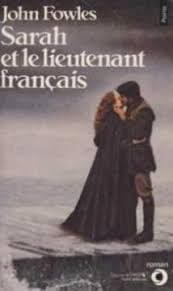
Sarah et le lieutenant
The scene is the village of Lyme Regis on Dorset's Lyme Bay..."the largest bite from the underside of England's out-stretched southwestern leg." The major characters in the love-intrigue triangle are Charles Smithson, 32, a gentleman of independent means & vaguely scientific bent; his fiancée, Ernestina Freeman, a pretty heiress daughter of a wealthy & pompous dry goods merchant; & Sarah Woodruff, mysterious & fascinating...deserted after a brief affair with a French naval officer a short time before the story begins. Obsessed with an irresistible fascination for the enigmatic Sarah, Charles is hurtled by a moment of consummated lust to the brink of the existential void. Duty dictates that his engagement to Tina must be broken as he goes forth once again to seek the woman who has captured his Victorian soul & gentleman's heart.
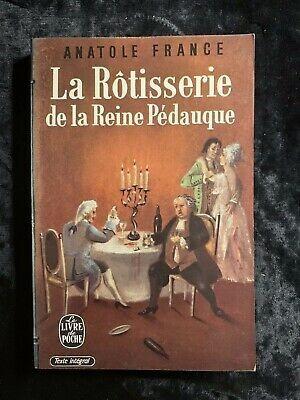
La rôtisserie de la reine Pédauque
This book follows young Jacques, the son of a meat seller, who at the age of six was put to work turning a spit from dawn to dusk, replacing their aging dog who had been doing the job. While turning the spit he was given a book on his lap from which to study. Later, a monk was so impressed with Jacques that he took him on to be tutored. From there the story progressed in a hilarious way( in particular whenever the subject referred to Salamanders)