Les adieux à la reine
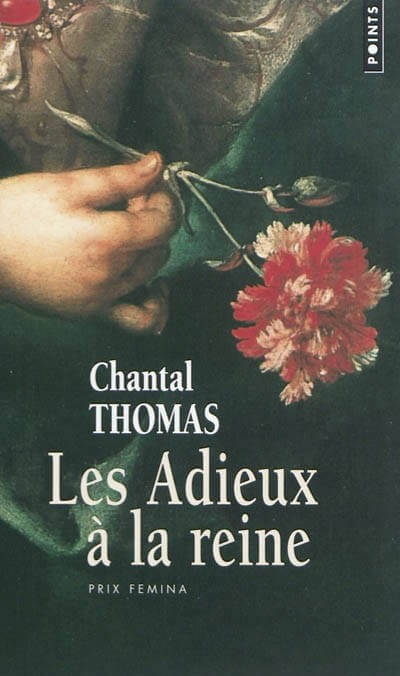
It was once the job of Madame Agathe-Sidonie Laborde to read books aloud to Marie-Antoinette. Now exiled in Vienna, she looks back twenty-one years to the legendary opulence of Versailles and meticulously reconstructs July 14, 15, and 16 of 1789.
When Agathe-Sidonie is summoned to the Queen's side on the morning of the 14th, Versailles is a miniature universe, sparkling with every outward appearance of happiness and power, peopled with nobles of minutely calibrated rank, and run according to a hundred-year-old ritual called the Perfect Day. But with the shocking news that someone has woken the King in the night, order begins to disintegrate and word of the fall of the Bastille seeps into court. Soon Versailles's beauty is nothing more than a shell encasing rising panic and chaos. Agathe-Sidonie watches as the Queen's attempts to flee are aborted; her most intimate friend betrays her; and the King, appearing to sleepwalk through this crisis, never alters his routine of visiting the Apollo Salon several times a day to consult a giant crystal thermometer.
From the tiniest garret to the Hall of Mirrors, where Marie-Antoinette stands alone and terrified in the dark, Chantal Thomas shows us a world on the edge of oblivion and an intimate portrait of the woman who, like "fire in motion," was its center.
La harpe de Birmanie
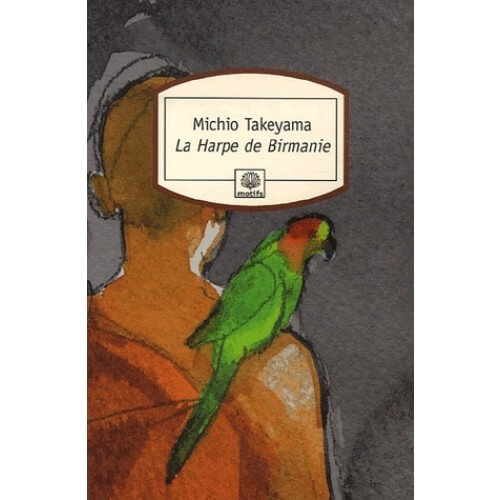
Having a war setting in Burma regarded as a Buddhist country near the end of World War II, this novel’s three parts followed by its varied chapters would reveal its readers to know and see how some fifty desperate Japanese soldiers lived, fought and escaped in time of war and why one of them, Mizushima Yasuhiko, has decided to desert his company to become a Buddhist monk as narrated in its three parts: The Singing Company, The Green Parakeet, and The Monk’s Letter (totaling 21 chapters) instead of returning home to Japan like his survived friends and colleagues.
Nocturne indien
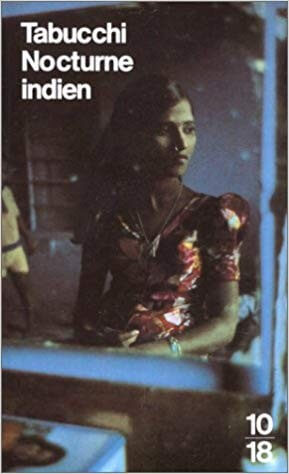
In its essence it is a novel about sight. As the novel moves forward the narrator accumulates pieces of observations in his travels through India, an awakening travel or nightmarish, to find his friend Xavier. Why, is not made clear though hints are left along the dark inlets he must travel, a Dantesque voyage. The voyage itself is a wonder of fascinating others, in a murky dreamlike chain of passages. This is a part of Tabucchi’s deft magic. The results are that I don’t realize what he was up to until I have put the book back up on the shelves and find myself for two days scratching my forearm for no reason. It is then that I start to get it, or begin to start to get it. There will be much more to arrive as time passes and therefore this review refuses to conclude…
Pendennis
Written immediately after Vanity Fair, Pendennis has a similar atmosphere of brooding disillusion, tempered by the most jovial of wits. But here Thackeray plunders his own past to create the character of Pendennis and the world in which he lives: from miserable schoolboy to striving journalist, from carefree Oxbridge to the high (and low) life of London. The result is a superbly panoramic blend of people, action and background. The true ebb and flow of life is caught and the credibility of Pen, his worldly uncle, the Major, and many of the other characters, extends far beyond the pages of the novel. Held together by Thackeray's flowing, confident prose, with its conversational ease of tone, Pendennis is as rich a portrait of England in the 1830s and 40s as it is a thorough and thoroughly entertaining self-portrait.
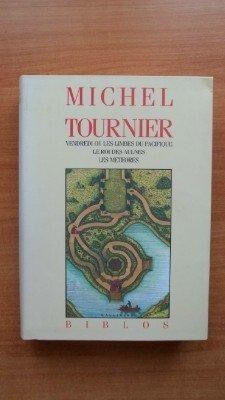
Vendredi ou les limbes du Pacifique
Le roi des Aulnes et Les météores
Vendredi ou les limbes du Pacifique: These days Robinson Crusoe is as an intrinsic part of the modern mythology as Ulysses or Flying
Dutchman…
And Michel Tournier’s retelling of the myth is an ironic allegory of the conquering of the globe by civilization and
progress and a philosophical parable on the nature of man. So here Robinson Crusoe is the God and Friday is a man serving his God –
he doesn’t understand God’s motives and purposes but he believes that one day he will manage to become a God too.
Le roi des Aulnes : The Ogre is a masterful tale of innocence, perversion, and obsession. It follows the passage of strange, gentle Abel Tiffauges from submissive schoolboy to "ogre" of the Nazi school at the castle of Kaltenborn, taking us deeper into the dark heart of fascism than any novel since The Tin Drum. Until the very last page, when Abel meets his mystic fate in the collapsing ruins of the Third Reich, it shocks us, dazzles us, and above all holds us spellbound.
Les météores : This is a book that can almost be broken into halves. For most of the first half, the focus is on Alexandre - a gay dandy garbageman. He always seems to be on the hunt and his homosexuality is presented as a gateway to the feelings the twins Jean and Paul have. It's as though Alexandre is searching for his own twin. The second half has Paul following Jean all over the world trying to restore their "geminate unit." Jean has other desires, namely trying to create a distinct separate identity. The book is scattered with twin mythology and philosophy.
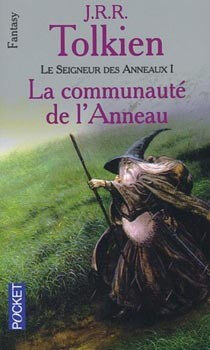
La communauté de l'anneau
Le seigneur des anneaux I
One Ring to rule them all, One Ring to find them, One Ring to bring them all and in the darkness bind them
In ancient times the Rings of Power were crafted by the Elven-smiths, and Sauron, The Dark Lord, forged the One Ring, filling it with his
own power so that he could rule all others. But the One Ring was taken from him, and though he sought it throughout Middle-earth, it
remained lost to him. After many ages it fell into the hands of Bilbo Baggins, as told in The Hobbit.
In a sleepy village in the Shire, young Frodo Baggins finds himself faced with an immense task, as his elderly cousin Bilbo entrusts the
Ring to his care. Frodo must leave his home and make a perilous journey across Middle-earth to the Cracks of Doom, there to destroy the
Ring and foil the Dark Lord in his evil purpose.
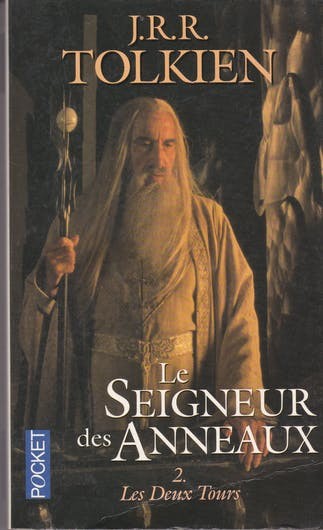
Les deux tours
Le seigneur des anneaux II
The Fellowship was scattered. Some were bracing hopelessly for war against the ancient evil of Sauron. Some were contending with the treachery of the wizard Saruman. Only Frodo and Sam were left to take the accursed Ring of Power to be destroyed in Mordor–the dark Kingdom where Sauron was supreme. Their guide was Gollum, deceitful and lust-filled, slave to the corruption of the Ring. Thus continues the magnificent, bestselling tale of adventure begun in The Fellowship of the Ring, which reaches its soul-stirring climax in The Return of the King.
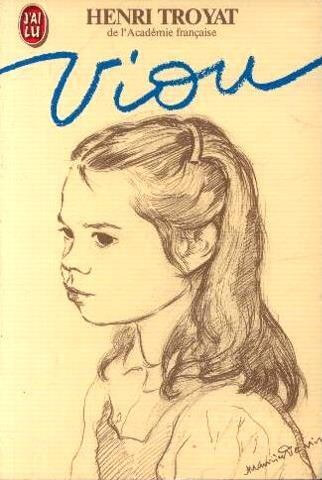
Viou
Sylvie, who also goes by the nickname Viou is an 8 years old little girl, who's world was turn upside down when her father died in ww2,
two years ago. Since then, she's been living with her grandparents in the french countryside (Le Puy), while her mother tries to makes end
meet in Paris.
In Le Puy, she surrounded by the absence of both her parents, the memory of a father she barely remembers and the strict moral of her very
religious and cold grand-mother. There she will also have to deal with more sadness and loss.
A beautiful story about a little girl lost in a world of adults she doesn't understand, and who doesn't seem to understand her either.
La tête sur les épaules
Philosophically rather interesting. A boy, influenced by Schopenhauer, decides he will become a murderer.
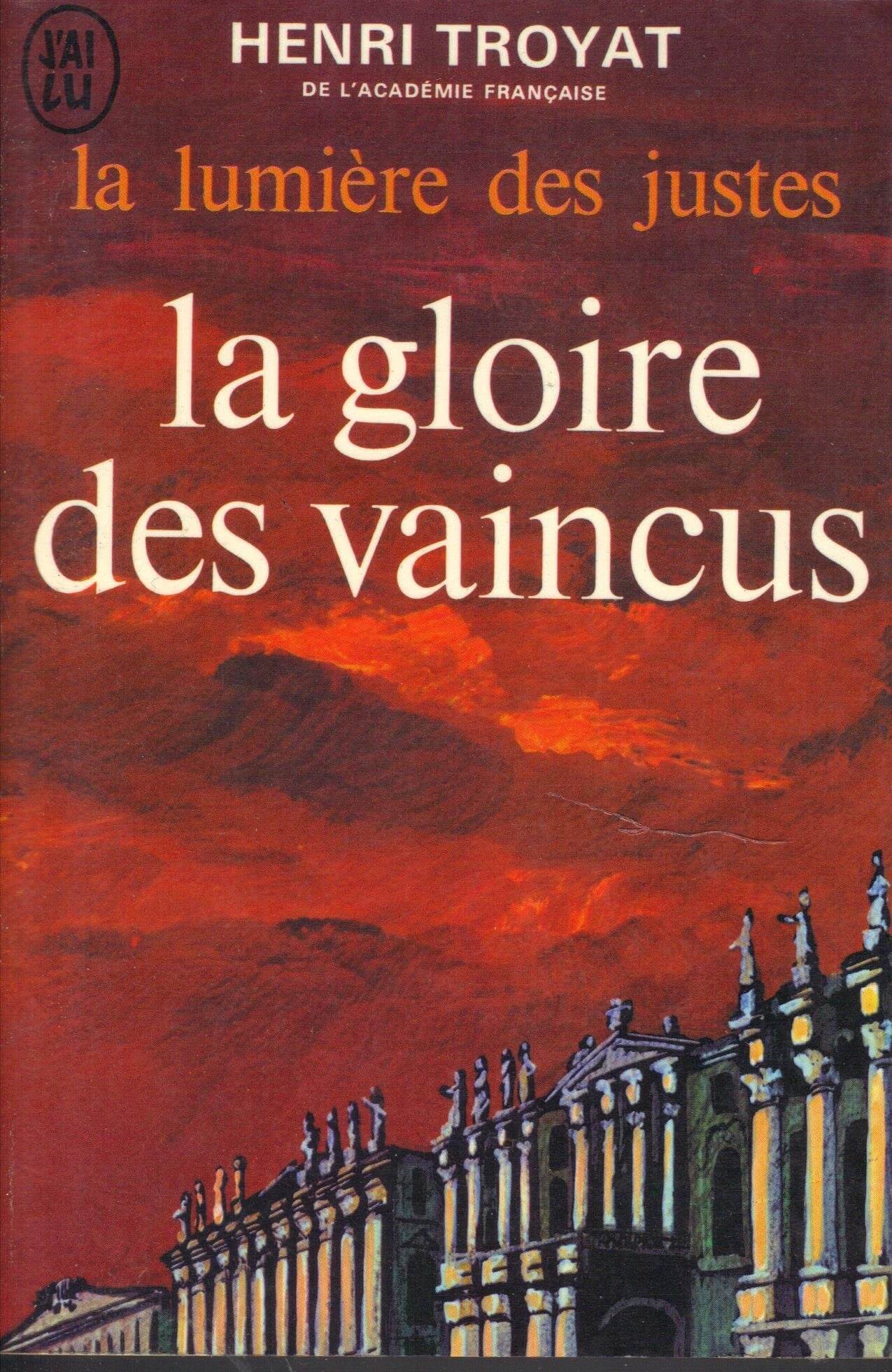
La gloire des vaincus
With Alexander I passing and the royal indecision who should take the throne, to the events at Senate Square on December 14th 1825 and touching briefly on Southern Society revolt led by Muravev-Apostol and to judgment of Nikolay I on the harsh punishment of the defeated.
La grive
Les semailles et les moissons
This is number 3 (of 5) in les Semailles et les Moissons, set in the late 1920s, and it's at this point that Amélie's daughter Elisabeth takes centre stage. She's wilful, determined, courageous, and recognisably Amélie's daughter despite the differences in character. The action moves from a busy cafe in Montmartre, to a strict Catholic boarding school deep in the countryside, to the home Elisabeth's kindly schoolteacher uncle and aunt. Every location is completely convincing; you feel Troyat has lived there himself.
Tendre et violente Elisabeth
Les semailles et les moissons
Troyat skips forward about 8 years and Elisabeth is now 19. Her parents have sold the cafe in Montmartre and are now running a hotel in Megève. Troyat clearly loved the Alps and knew the environment like the back of his hand.
Les égarés
It's a novel about the politics that led to World War II, through the eyes of a narrator that realizes the erroneous dilemmas caused by the 'black or white ' perspective that reigned at his time.
Le seigneur des anneaux
In ancient times the Rings of Power were crafted by the Elven-smiths, and Sauron, the Dark Lord, forged the One Ring, filling it with his
own power so that he could rule all others. But the One Ring was taken from him, and though he sought it throughout Middle-earth, it
remained lost to him. After many ages it fell by chance into the hands of the hobbit Bilbo Baggins.
From Sauron's fastness in the Dark Tower of Mordor, his power spread far and wide. Sauron gathered all the Great Rings to him, but always
he searched for the One Ring that would complete his dominion.
When Bilbo reached his eleventy-first birthday he disappeared, bequeathing to his young cousin Frodo the Ruling Ring and a perilous quest:
to journey across Middle-earth, deep into the shadow of the Dark Lord, and destroy the Ring by casting it into the Cracks of Doom.
The Lord of the Rings tells of the great quest undertaken by Frodo and the Fellowship of the Ring: Gandalf the Wizard; the

hobbits Merry, Pippin, and Sam; Gimli the Dwarf; Legolas the Elf; Boromir of Gondor; and a tall, mysterious stranger called Strider.
Cligès
In this extraordinarily fine translation of Cligès, the second of five surviving Arthurian poems by twelfth-century French poet
Chrétien de Troyes, Burton Raffel captures the liveliness, innovative spirit, and subtle intentions of the original work. In this poem,
Chrétien creates his most artful plot and paints the most starkly medieval portraits of any of his romances. The world he describes has
few of the safeguards and protections of civilization: battles are brutal and merciless, love is anguished and desperate. Cligès
tells the story of the unhappy Fenice, trapped in a marriage of constraint to the emperor of Constantinople. Fenice feigns death, then
awakens to a new, happy life with her lover.
Vingt mille lieues sous les mers
French naturalist Dr. Aronnax embarks on an expedition to hunt down a sea monster, only to discover instead the Nautilus, a remarkable submarine built by the enigmatic Captain Nemo. Together Nemo and Aronnax explore the underwater marvels, undergo a transcendent experience amongst the ruins of Atlantis, and plant a black flag at the South Pole. But Nemo's mission is one of revenge-and his methods coldly efficient.
Le silence de la mer
The Silence of the Sea is a French novel written during the summer of 1941 and published in early 1942 by Jean Bruller under the pseudonym "Vercors". Published secretly in German-occupied Paris, the book quickly became a symbol of mental resistance against German occupiers. In the book, Vercors tells of how an old man and his niece show resistance against the German occupiers by not speaking to the officer, who is occupying their house. The German officer is a former composer, dreaming of brotherhood between the French and German nations, deluded by the Nazi propaganda of that period. He is disillusioned when he realizes the real goal of the German army is not to build but to ruin and to exploit. He then chooses to leave France to fight on the Eastern Front, cryptically declaring he is "off to Hell."
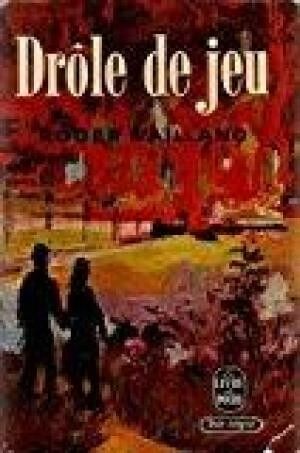
Drôle de jeu
Dans la France occupée, quelques hommes jouent un peu malgré eux le jeu dangereux de la résistance armée et de l'aventure amoureuse. Le Libertin Marat, le romantique Rodrigue, le naïf Frédéric vivent l'activité terroriste comme un métier tyrannique où le risque tient presque lieu de loisir. Autour de Mathilde, jadis aimée par Marat, et dont les charmes déclinants éveillent encore la séduction, les rencontres se nouent, chargées de passion et d'inquiétude. Mathilde est-elle dangereuse ? Drôle de jeu offre, avec un mélange de lucidité cynique, de touches psychologiques et de réflexions politiques, un tableau pittoresque de la vie à Paris, lorsque collaborateurs et patriotes tentaient d'oublier, dans les mêmes endroits, ce que leur réservait le lendemain. Sous le sérieux du combat engagé contre le nazisme, nul mieux que Roger Vaillant dans ce roman n'a montré la part de désillusion assumée avec autant de désespoir que d'enthousiasme.
Le pavillon des enfants fous
A treize ans, Valérie Valère a été internée au pavillon des enfants fous d’un grand hôpital parisien. A quinze ans, elle écrit le récit de ce séjour. Son livre n’est pas seulement une vision du monde hospitalier, des traitements pour les malades mentaux, le cri pathétique d’une adolescente de treize ans qui, un jour, a refusé toute nourriture : elle prend conscience des raisons profondes qui l’ont amenée au comportement suicidaire qu’est l’anorexie. Et son récit est avant tout l’histoire d’une guérison.
Safari-vérité
roman
Déçu et abandonné par celle qu'il aimait, Jacques, un jeune Parisien de l'Ile Saint-Louis, est parti pour la Côte-d'Ivoire, en quête d'oubli et d'aventures La rencontre, en brousse, d'un grand chasseur chevaleresque, Pranget, décide le jeune homme à devenir guide de safaris en compagnie d'un camarade de rencontre, hippie à qui la chasse fera découvrir une raison de vivre.
Au cours d'un safari aux péripéties tragiques, une idylle se nouera entre Jacques et Isabelle, une jeune journaliste venue en Afrique pour y faire un reportage sur la chasse au gros gibier. Mais la jeune femme pourra-t-elle se résoudre à renoncer à son métier et à son univers civilisé pour partager la vie d'un coureur de brousse professionnel ?
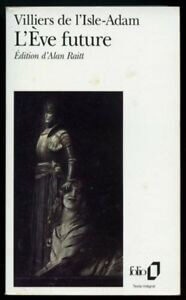
L'Eve future
Edition d'Alain Raitt
L'Ève Future (1886) est au roman ce que les "Poésies" de Mallarmé sont à la poésie : le chef-d'oeuvre de l'époque symboliste,
l'anti-Zola, l'anti-Goncourt.
Villiers est le plus grand conteur fantastique français. La donnée est fantastique, ou de science-fiction, puisqu'il s'agit de créer une
femme artificielle, qui évite les inconvénients des femmes réelles. Ce livre traite de l'amour impossible, pour une femme qui n'existe
pas. C'est aussi un roman de la révolte, qui se termine sur le frisson du créateur de l'automate. Edison, face au silence glacé, à
"l'inconcevable mystère" des cieux ; un roman proche du mythe de Faust autant que de Jules Verne, par l'anticipation
scientifique ; un ouvrage philosophique parce qu'il médite sur l'être et le paraître. Le style est brillant, somptueux, insolite et
ironique, comme Mallarmé l'a relevé : il mène "l'ironie jusqu'à une page cime, où l'esprit chancelle."
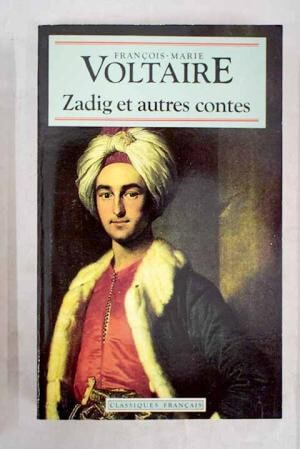
Zadig et autres contes
Zadig is a thinly disguised philosophical satire on Voltaire's own environment, addressing all the issues he cared and raged about:
nepotism, power balance, sexual exploitation, abuse, medical charlatanism, bizarre traditions, superstition, evidence-based science versus
blind faith.
Zadig is born to suffer, being cursed with a "beau naturel fortifié par l'éduaction", thus an odd man out in a society where the
majority of people are both mean-spirited and stupid. He is up against greed, envy, corruption, lust and hypocrisy, always trying his best
to support human rights and general justice himself.
L'ingénu
L'Ingénu is a satirical novella by the French writer Voltaire, published in 1767. It tells the story of a Huron called "Child of Nature" who, after having crossed the Atlantic to England, crosses into Brittany, France in the 1690s. Upon arrival, a prior notices depictions of his brother and sister-in-law, whom they deduce to be the Huron's parents - making him French.
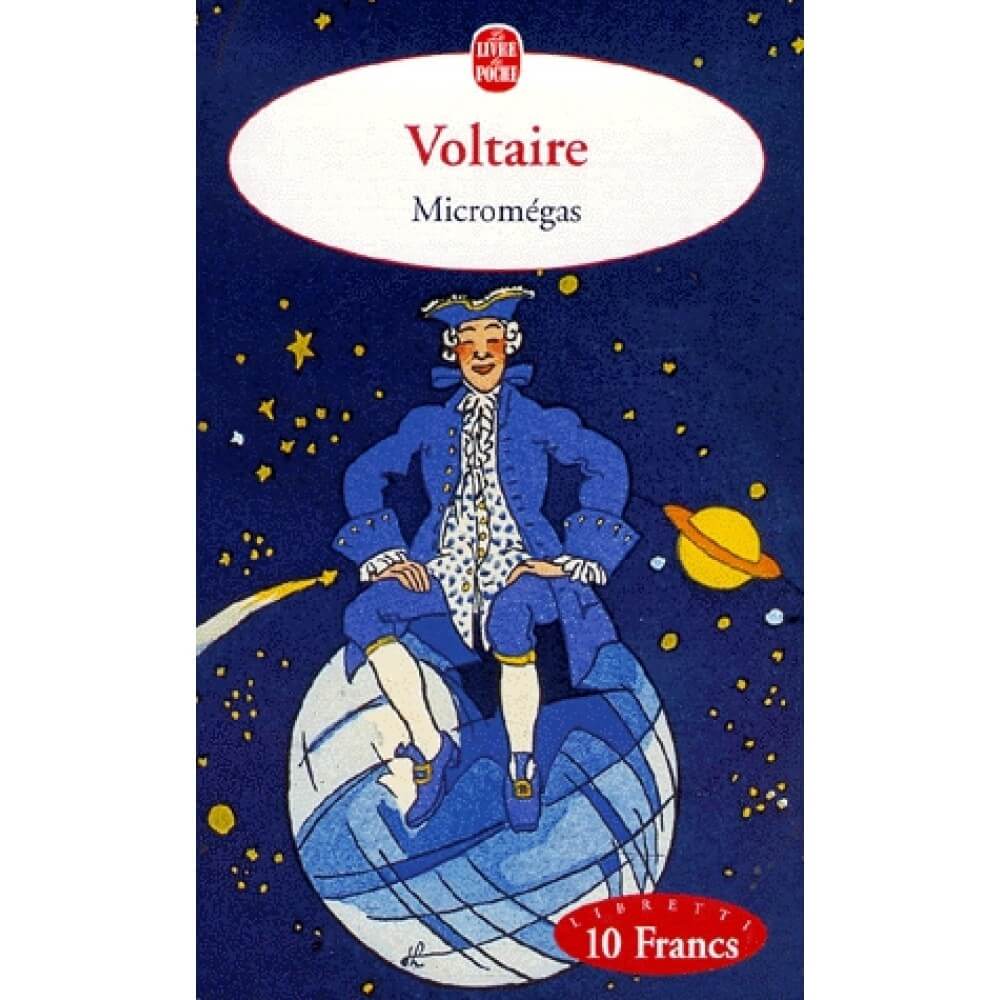
Micromégas
A being from a planet circling the star Sirius visits the Earth with his companion from the planet Saturn, both of gargantuan size. This scifi short story deals with perception and point of view, but also allowed the philosopher Voltaire to comment on his contemporary society.
Le philosophe ignorant
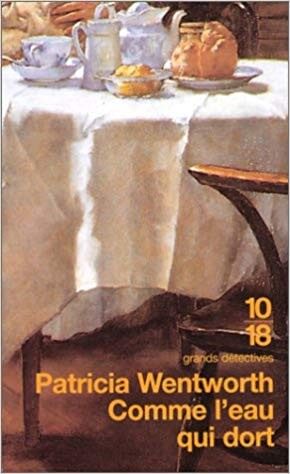
Comme l'eau qui dort
About a year after his Uncle James passed, Edward returned to the village and now, the only remaining witness to the signing of the second will has come up with a scheme to benefit himself. He is the first one to end up drowned in the watersplash.
Le montage
Psar wanted to go home. A White Russian, living in Paris, he is not the most obvious immigrant to the Mother Country. But there is a way - if Psar will only collude with the KGB in a dazzling plot to confound both the dissident movement and Western liberals alike. Psar must agree, and so begins a nightmare of manipulation and obscure but increasing danger, as the steely web of the KGB's all-pervasive disinformation network is revealed in its ruthless complexity. Seldom has the seamy and dangerous world of espionage been so relentlessly explored as in this brilliant and disturbing award winning novel.
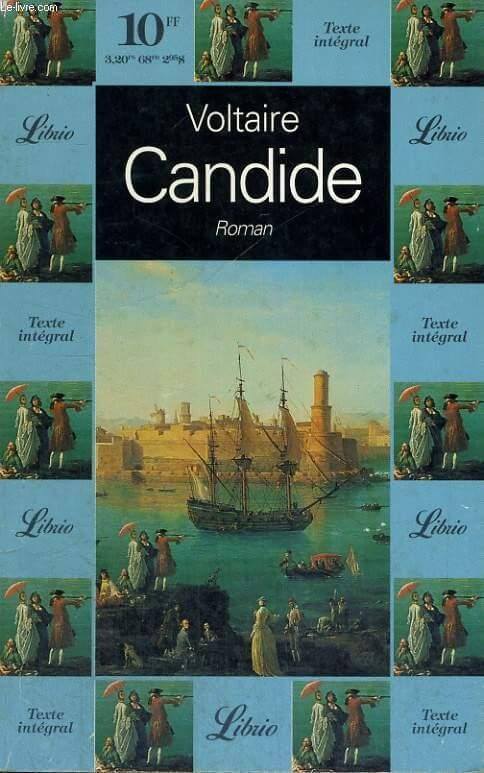
Candide
Candide is the story of a gentle man who, though pummeled and slapped in every direction by fate, clings desperately to the belief that he lives in "the best of all possible worlds." On the surface a witty, bantering tale, this eighteenth-century classic is actually a savage, satiric thrust at the philosophical optimism that proclaims that all disaster and human suffering is part of a benevolent cosmic plan. Fast, funny, often outrageous, the French philosopher's immortal narrative takes Candide around the world to discover that -- contrary to the teachings of his distinguished tutor Dr. Pangloss -- all is not always for the best. Alive with wit, brilliance, and graceful storytelling, Candide has become Voltaire's most celebrated work.