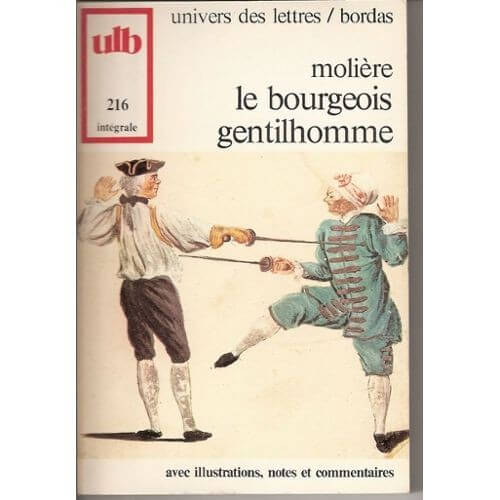
Le bourgeois gentilhomme
This is a play about a middle class merchant whose goal in life is to become a member of the aristocracy and he tries many things, including arranging his daughter's marriage, to achieve that goal. In a way this desire is almost an obsession, and his friends take advantage of this by playing a joke on him: they pretend to be members of the Turkish court and bestow him with the title of Paladin.
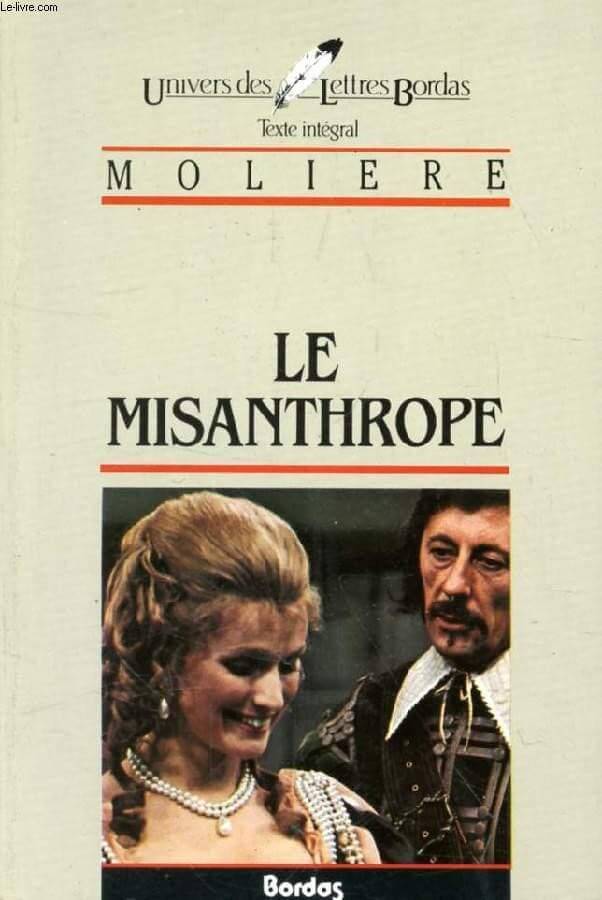
Le misanthrope
This play satirizes the hypocrisies of French aristocratic society, but it also engages a more serious tone when pointing out the flaws, which all humans possess. The play differs from other farces at the time by employing dynamic characters like Alceste and Célimène as opposed to the traditionally flat characters used by most satirists to criticize problems in society. It also differs from most of Molière's other works by focusing more on character development and nuances than on plot progression. The play, though not a commercial success in its time, survives as Molière's best-known work today. Much of its universal appeal is due to common undercurrents of misanthropy across cultural borders.
Dom Juan
So Moliere wrote a play on a douche bag named Juan. But on the surface only. Because there's so much more to this short play than the
despicable character. Moliere scorns many things in the work. He laughs at the bourgeoisie, the tax man, the noble men who duel for honor,
and he dares to mock religious zeal though in those times that could get a man in big trouble and it did. But I suppose that what Moliere
resented the most, what got him going, was hypocrisy. In the end, I feel Dom Juan is struck by hell's lightning because of his change of
heart. Dom Juan decides that he will continue to be a douche bag but now he's going to pretend to be a nice guy and hide his true identity.
L'avare
The aging but vital Harpagon is hoarding every centime he can get his hands on, making sure that his two children, the virginal Elise and the dandy Cleante, live under his iron will. To complicate matters, Elise has fallen in love with the handsome Valere, who masquerades as a servant in the household, despite his noble birth, and, worse yet, Cleante and Harpagon are both smitten with the same woman, the beautiful, if somewhat dim, Marianne. Meanwhile, scheming servants and assorted hustlers angle for Harpagon's incredible wealth, much of which is now buried and protected by snarling Dobermans. The delirious plot spirals to a wildly comic finish, filled with all the masterful plot twists and outrageous revelations one would expect from one of Molière's finest plays.
Arlequin poli par l'amour
Le Tartuffe
Condemned and banned for five years in Molière’s day, Tartuffe is a satire on religious hypocrisy. Tartuffe worms his way into Orgon’s household, blinding the master of the house with his religious "devotion," and almost succeeds in his attempts to seduce his wife and disinherit his children before the final unmasking.
Les femmes savantes
Henriette wants to marry Clitandre, who doesn't meet Philaminte's (the mom) expectations. Philaminte wants her daughter to marry an overrated and obnoxious poet named Trissotin. So many characters come in action.
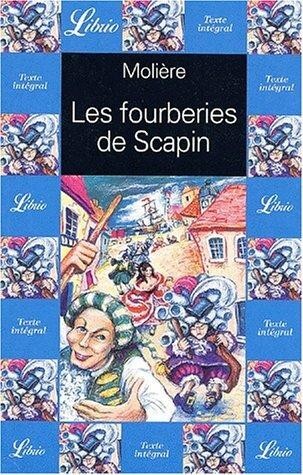
Les fourberies de Scapin
Scapin that fox and intelligent server who gets in two relations between his master Octave son of Argante in his relation to Zerbinette.
Scapin was able to force the event of the scene at his will so in all the scenes he was present and his Tricks were touchable in all the
piece of Theater.
Phèdre
Phaedra, married to Theseus, has always nurtured a secret love for his son, Hippolytus. When she receives news that Theseus is dead, she finally confesses her love to Hippolytus, who is in love with Aricia and is disgusted by his step-mother's advances. But, hey, guess what? Theseus isn't dead and returns just in time for all Hades to break loose . . .
La farce
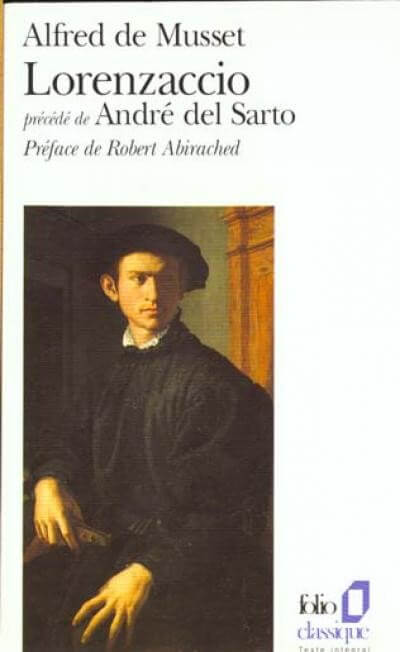
Lorenzaccio
précédé de André del Sarto
Set in 16th Century Florence, it is a wonderful text about how to act meaningfully in a state governed by a tyrant. The adolescent
Lorenzaccio finally decides to assassinate the evil Duc, an act that will cost him his life.
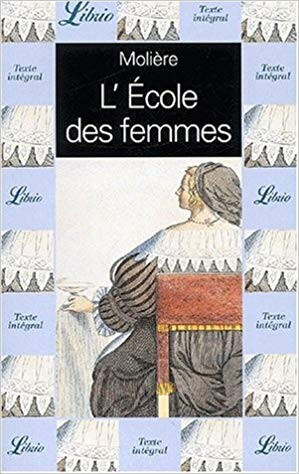
L'école des femmes
The play depicts a character, who is so intimidated by femininity that he resolves to marry his young, naïve ward and proceeds to make clumsy advances to this purpose. Arnolphe, the main protagonist, is a man of 42 years who has groomed the young Agnès since the age of 4. Arnolphe supports Agnès living in a nunnery until the age of 17, when he moves her to one of his abodes, which he keeps under the name of Monsieur de la Souche. Arnolphe's intention is to bring up Agnès in such a manner that she will be too ignorant to be unfaithful to him and he becomes obsessed with avoiding this fate. To this end, he forbids the nuns who are instructing her from teaching her anything that might lead her astray. Right from the very first scene, Chrysalde warns Arnolphe of his downfall, but Arnolphe takes no heed. ...
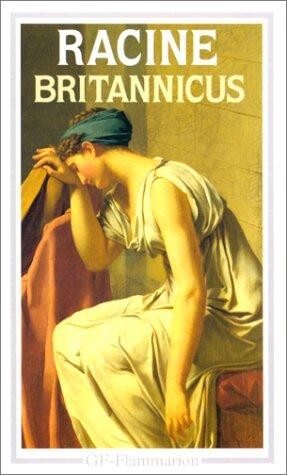
Britannicus
The play begins with Nero's mother, and power behind the throne, seeking a private audience with her son. The thing is that Nero doesn't particularly want to speak to her anymore, namely because of her influence over him. Nero has also fallen in love with a young lady named June (who should be called Junia). The problem is that she loves somebody else, the Britannicus of the title. Okay, we might just put this down to your typical love triangle, but this is Nero we are talking about, and when you happen to be him you sort of don't like taking no for an answer.
Andromaque
The complex ties which bring the four protagonists of Andromaque together and make their downfall inevitable are the essence of the beauty of this tragedy, and Racine, having set up this conundrum, explores it poetically through human feelings – succeeding in both never revealing the hopeless outcome and always reminding us that it is there, waiting, at the end of the last act. The reason I found this play so engaging was, perhaps, that it has every element of a Shakespearean comedy and romance – namely, lovers at cross-purposes – yet does not yield to the deus-ex-machina, anticlimactic and frankly unconvincing happy endings the Bard provides. Oreste, Hermione, Andromaque and Pyrrhus are all deeply moving characters, tragic heroes in their own rights, as they are each equally guilty and innocent, each equally responsible for and victims of their fates.
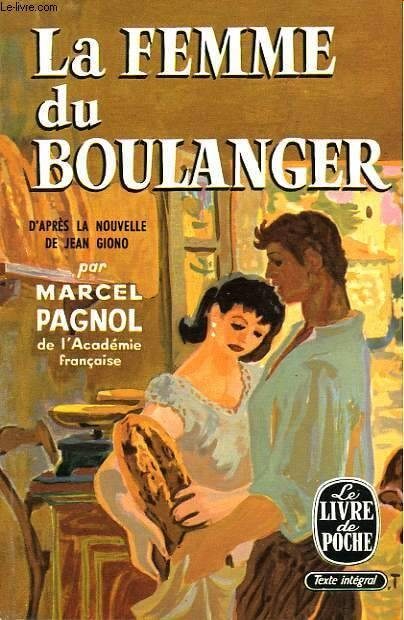
La femme du boulanger
A middle-aged baker named Aimable and his much younger wife Aurélie settle in a small village of the Provence hills. This village is full of well-meaning but stubborn peasants who all hold generation-old grudges against each other; it is also the home of a young priest, and a 50-something hedonistic Marquis. Just a few days after the new baker is settled in, his wife runs away with a young and handsome shepperd at the Marquis' employ. Shocked and depressed, Aimable declares that he won't make any more bread if his wife doesn't come back, causing the entire village to bury the hatchet and work together to find his wife and return her to her husband so that they may get fresh bread again.
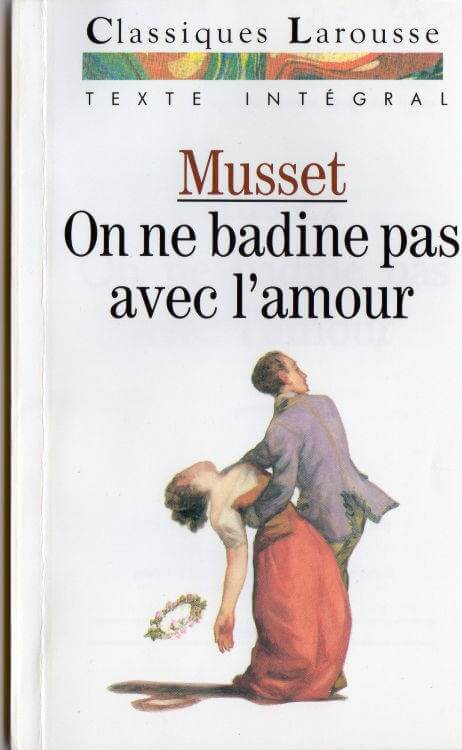
On ne badine pas avec l'amour
A very beautiful play that starts as a comedy but ends - in the last few lines - as a tragedy; including at the same time some farcical elements (represented by the two priests, and the governess). In spite of the quick pace of the play and the light surface plot, it tackles issues of high importance regarding human behavior and emotion; it sheds lights on the psychology of love and jealousy, the high and unrealistic standards of love a person may set, and the influence of others’ personal experience on one’s behavior and attitude (social influence). On the other hand, the play talks about fake appearances, gossiping, social ranking, and the importance of complying with the social norms, which implies here that, the marrying couple should be equal in their social status. Finally, the play shows Musset’s sensitivity as well as his understanding of human psychology and the intricate nature of love, using his poetic language.
Les mains sales
A political drama set in the fictional country of Illyria between 1943 and 1945, the story is about the assassination of a leading politician. The story is told mainly in the form of a flashback, with the killer describing how he carried out his mission. The killer's identity is established from the beginning, but the question is whether his motivations were political or personal. Thus, the play's main theme is not on who did it but on why it was done.
Les jeux sont faits
Eve and Pierre meet after both being declared dead. It appears Eve's husband poisoned her, and Pierre was murdered as a plot to bring his regency down. Now that there is nothing left to do (death is not that fun) they end up falling for one another and discover they were soulmates. To undue the injustice, the department of the dead allow them to return to earth to be together. But unfortunately, their priorities remain on fixing their past and not their present.
Cyrano de Bergerac
The play is a fictionalization following the broad outlines of his life. Hercule Savinien Cyrano de Bergerac, a cadet (nobleman serving as a soldier) in the French Army, is a brash, strong-willed man of many talents. In addition to being a remarkable duelist, he is a gifted, joyful poet and is also a musician. However, he has an extremely large nose, which causes him to doubt himself. This doubt prevents him from expressing his love for his distant cousin, the beautiful and intellectual Roxane, as he believes that his ugliness would prevent him the "dream of being loved by even an ugly woman."
Knock ou le triomphe de la médecine
The ambitious Dr. Knock arrives in a rural village, Saint-Maurice, to step into Dr. Parpalaid's footsteps as the local physician. Unfortunately, most of the villagers are in good health. He therefore decides to make everybody believe they are actually far sicker then they actually are...
Oedipe roi
Oedipus sent his brother-in-law Creon to ask advice of the oracle at Delphi concerning a plague ravaging Thebes. Creon returns to report that the plague is the result of religious pollution, since the murderer of their former King, Laius, had never been caught. Oedipus vows to find the murderer and curses him for causing the plague. ...
Les séquestrés d'Altona
The title recalls his formulation "Man is condemned to be free." It is the only one of Sartre's fictional works which deals directly with Nazism, and also serves as a critique of the then-ongoing Algerian War. The action takes place in Altona, a borough of the German city-state of Hamburg.
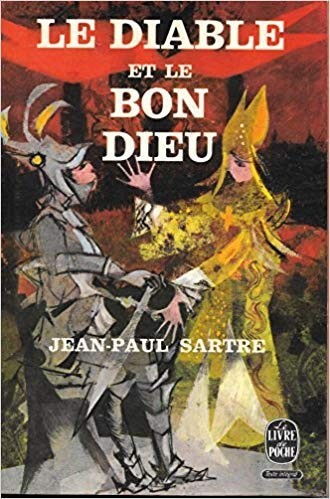
Le diable et le bon dieu
The play concerns the moral choices of its characters, warlord Goetz, clergy Heinrich, communist leader Nasti and others during the German Peasants' War. The first act follows Goetz' transformation from vicious war criminal to a "good" person of noble deeds, as during a siege of the town of Worms, he decides not to massacre its citizens.
L'europe intellectuelle et le théâtre. Signification de l'héroïsme cornélien
Genèse et signification