Le portail
In 1975, the Khmer Rouge came to full power in Cambodia and began systematically to eliminate whole classes of society. The Cambodian genocide was among the grossest and most thorough of all the purges carried out by Left on Right or vice-versa in the years after 1945. The methods employed by the executioners in The Killing Fields, and by the torture teams in the interrogation complex at Tuol Sleng, had an abominable tang of inventiveness about them: the use of palm-leaf fibres to decapitate counter-revolutionaries, for instance, or the cages full of spiders and scorpions with which the torturers extracted meaningless confessions from their internees. François Bizot was a captive and this book his his memoir of his experience as a prisoner of the Khmers Rouges.
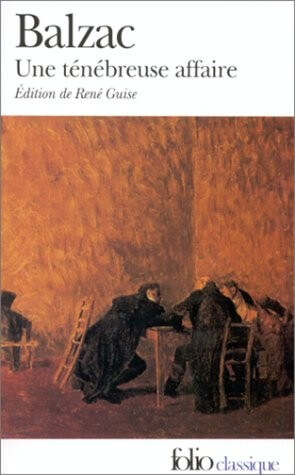
Une ténébreuse affaire
Set earlier than most of Balzac's Comedie Humaine, the novel covers the years 1803-6, when Napolean was making himself first Consul and then Emperor. The inclusion of Napoleon himself, as well as figures like Talleyrand and Fouche, makes this a historical novel. But it is also an early example of the detective story, in which the sinister, implacable police agent, Corentin, stalks his way towards vengeance on his aristocractic enemies.
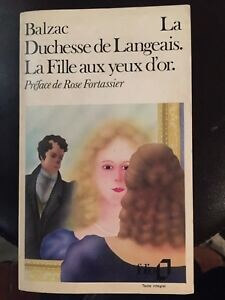
La duchesse de Langeais
La fille aux yeux d'or
Balzac starts with a rather gloomy view of Parisians: gloomy, pallid and dull, with no values other than a preoccupation with gold and pleasure. Everyone is striving to be better than his station, and the artist (who presumably includes Balzac himself) labours long and hard for little reward. The air is foul, the streets are dirty and it’s not a pretty picture of Paris at all. Only people transcend these negativities, and then only when they are young and innocent.Henri de Marsay, natural son of Lord Dudley and the Marquise de Vordac strolls out one day into the Tuileries in this Paris. His circumstances were unfortunate for Lord Dudley had married his mother off to an old gentleman called M. de Marsay who brought Henri up as his own (for the price of a life interest in the fund that Henri was to inherit). Before long de Marsay died and his mother remarried, to de Vordac; she had lost interest in both her son and Lord Dudley (partly because of the war between France and England, and partly because fidelity was never fashionable in Paris). Dudley himself had never taken any interest in the product of his fling, and so it was that Henri had no father other than de Marsay, who, prior to his death was a gambler and a wastrel.
E=MC 2, mon amour
Life begins when you meet a beautiful blond from Tucson, USA. You're no longer just Daniel, a pint-sized Parisian film freak. You're Bogart, Brando, and Redford all rolled into one - even though you're only eleven!
Life begins when you meet a boy from France who calls you "Baby" and thinks you're a dish. You're no longer just Lauren, a precocious child who dreams of passion. You're in love - even though you're not quite twelve.
Trouble begins with a romantic old rogue and a yen for faraway places. Before you know it, there you are, adrift on the canals of Venice - young, in love, on the lam, and a long, long way from eleven!
L'ombre d'un père
Gary is a teenager living with his mum Nicole in Wellington. He never knew his father and his mother refuses to answers his questions. One day, Gary meets a French girl in a bar where she tells him that she knows his dad.
Lettre aux Anglais
Bernanos is a liberal French Catholic writer who, among other things, spoke out against the Franco terror in Spain. More lately he has lived in Brazil. These "letters" are motivated by a love of justice and human dignity that is moving, even if its expression is often abstract and other-worldly.
Le Gône du Chaâba
Le Gône du Chaâba is an autobiographical novel. The title itself is a clever play on one of his regional language's words. 'Gone' is a term for 'kid' or 'lad' in the Lyonnais dialect of Arpitan used in his native region and city, while 'Chaâba' is an Arabic word, used in the book as the name of a shantytown in Sétif, Algeria. Both Azouz Begag and the protagonist of the novel grew up in a shanty town outside Lyon, almost entirely inhabited by Algerian or Kabyle immigrant workers. The language and culture were predominantly a mix of Algerian Arabic, Kabyle Tamazigh and Arpitan. The problems of the ghetto-like environments established by and for guest workers in France after WWII, of the individual children of these ghettos who are French Citizens by dint of being born in France and even often from French parents and for whom 'breaking out' is both very difficult and statistically improbable, and Azouz Begag's own success in managing being part of the mainstream of French culture without having to forget any part of his heritage but rather by accumulating all cultural influences, are at the heart of the novel.
Respire
Breathe is the haunting confession of nineteen-year-old Charlene Boher. From her prison cell, Charlene recounts her lonely adolescence. Growing up shy and unpopular, Charlene never had many friends. That is, until she meet Sarah, a beautiful and charismatic American-French girl who moved back to Paris for high school. Much to Charlene's shock and delight, the two girls quickly develop an intense friendship. With Sarah by her side, Charlene finally begins to feel accepted and even loved.
However, after a brief idyllic period, the girls' relationship becomes rocky and friendship veers towards obsession. As Sarah drops Charlene for older, more glamorous friends, Charlene's devotion spirals into hatred. Unfolding slowly and eerily towards a shocking conclusion, Breathe is an intense, convincing portrait of a possessive and ambiguous friendship.
Parle-leur de batailles, de rois et d'éléphants
In 1506, Michelangelo―a young but already renowned sculptor―is invited by the Sultan of Constantinople to design a bridge over the Golden Horn. The sultan has offered, alongside an enormous payment, the promise of immortality, since Leonardo da Vinci’s design had been rejected: “You will surpass him in glory if you accept, for you will succeed where he has failed, and you will give the world a monument without equal.”
Michelangelo, after some hesitation, flees Rome and an irritated Pope Julius II―whose commission he leaves unfinished―and arrives in Constantinople for this truly epic project. Once there, he explores the beauty and wonder of the Ottoman Empire, sketching and describing his impressions along the way, and becomes immersed in cloak-and-dagger palace intrigues as he struggles to create what could be his greatest architectural masterwork.
Tell Them of Battles, Kings, and Elephants―constructed from real historical fragments―is a story about why stories are told, why bridges are built, and how seemingly unmatched pieces, seen from the opposite sides of civilization, can mirror one another.
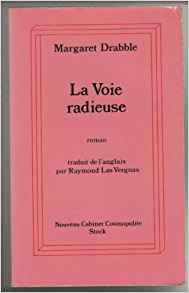
La voie radieuse
The Radiant Way is a 1987 novel by British novelist Margaret Drabble. The novel provides social commentary and critique of 1980s Britain, by exploring the lives of three Cambridge-educated women with careers as knowledge professionals.
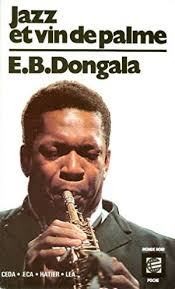
Jazz et vin de palme
Jazz, aliens, and witchcraft collide in this collection of short stories by renowned author Emmanuel Dongala. The influence of Kongo culture is tangible throughout, as customary beliefs clash with party conceptions of scientific and rational thought. In the first half of Jazz and Palm Wine, the characters emerge victorious from decades of colonial exploitation in the Congo only to confront the burdensome bureaucracy, oppressive legal systems, and corrupt governments of the post-colonial era. The ruling political party attempts to impose order and scientific thinking while the people struggles to deal with drought, infertility, and impossible regulations and policies; both sides mix witchcraft, diplomacy, and violence in their efforts to survive. The second half of the book is set in the United States during the turbulent civil rights struggles of the 1960s. In the title story, African and American leaders come together to save the world from extraterrestrials by serving vast quantities of palm wine and playing American jazz. The stories in Jazz and Palm Wine prompt conversations about identity, race, and co-existence, providing contextualization and a historical dimension that is often sorely lacking. Through these collisions and clashes, Dongala suggests a pathway to racial harmony, peaceful co-existence, and individual liberty through artistic creation.
L'incendie
Bni Blouden is a small Algerian village in the mountains where life goes on at its normal pace. Down below, in the fertile valley, the French colonists have the good life. The year is 1939, still some time from Algerian freedom. However, the Arabs in Bni Blouden talk about striking and soon the country is in an uproar. When a fire breaks out, the strikers are accused of being arsonists and the strike leaders are arrested. This straightforward plot outline fails to convey the beauty of Dib’s novel. Its strength is in conveying what makes this simple village, with its simple people, a place of importance, a place of beauty, even. We see it primarily through the eyes of Omar and we see it as a place where ordinary men and women are trying to scratch out a miserable living in a country that has been torn from them by a colonizing power. They are not great people – (Bni Boublen may not be a wonderful place. They don’t know much, the people who live there, although they have the reputation of being educated. They know even less about Bni Boublen., says Comandar, Omar’s mentor) – but they have their dignity, they are individuals and Dib shows us how they much they matter. In short, they are worth fighting for and Dib shows us why.
Comment peut-on être français?
Begins like a hopeful novel about an Iranian refugee starting a new life, then develops into an interesting epistolary novel as the main character decides to write letters to Montesquieu to improve her French. This is where she reflects on cultural differences, and the current regime in Iran as opposed to life in the West. The last third of the book throws the reader into an unexpected direction as an event triggers painful memories which resurface and threaten her newfound wellbeing and freedom
Hadriana dans tous mes rêves
Hadriana in All My Dreams, winner of the prestigious Prix Renaudot, takes place primarily during Carnival in 1938 in the Haitian village of Jacmel. A beautiful young French woman, Hadriana, is about to marry a Haitian boy from a prominent family. But on the morning of the wedding, Hadriana drinks a mysterious potion and collapses at the altar. Transformed into a zombie, her wedding becomes her funeral. She is buried by the town, revived by an evil sorcerer, and then disappears into popular legend.
Set against a backdrop of magic and eroticism, and recounted with delirious humor, the novel raises universal questions about race and sexuality.
L'écrivain de la famille
it is a very good book and it is interesting how we pick up on what people think of us. What we think of people and what we do with it.. Our spirit can fight our destiny but eventually it does catch up with us. We let go and everything is alright. Like Cohelo, Delacourt is a very spiritual writer because of the synchronicity he respects where timing is everything.
La chaussure sur le toit
The story La chaussure sur le toit consists of ten short stories on the same theme: a shoe placed on the roof of the building opposite, in Paris. Each chapter is equivalent to a story with a well-defined character and a well-founded character: a dreamy child, a burglar in love, three crazy thugs, an undocumented immigrant, a television presenter, a melancholic dog, a homosexual firefighter, an eccentric lady, a contemporary artist, an angel in pants.
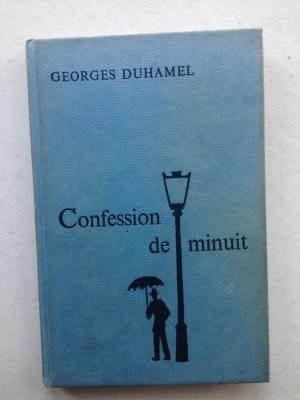
Confession de minuit
This book makes you want to go to Paris again, and to spend some time in the "historical" streets of this great city ! really ! Loved it, it's also very well written.
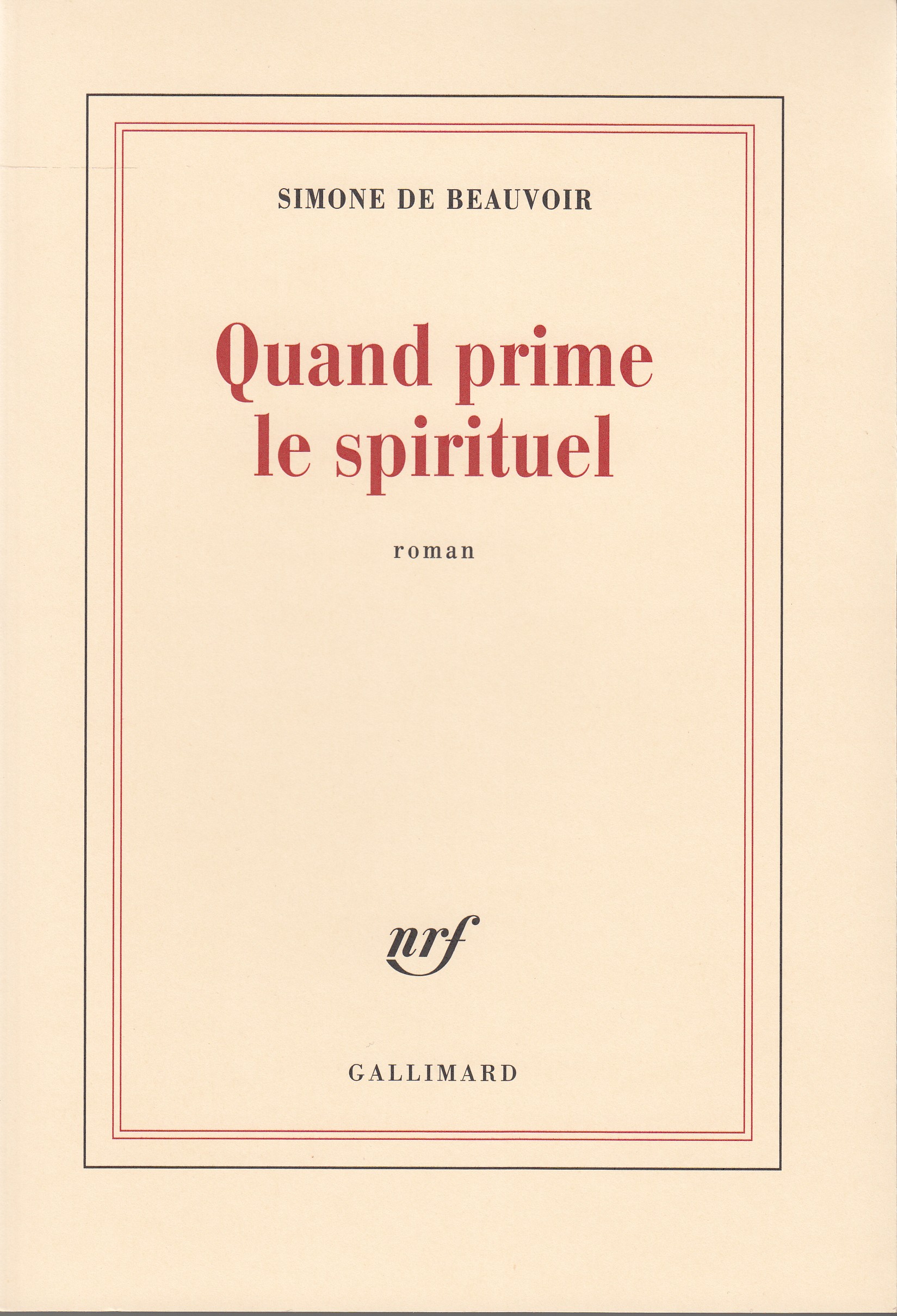
Quand prime le spirituel
When Things of the Spirit Come First is Simone de Beauvoir's 'first' work of fiction. After a number of false starts, in 1937 she submitted this collection of interlinked stories to a publisher. But it was turned down by both Gallimard and Grasset. It consists of five short stories which are weaved together in such a way that it to structurally similar to a more traditional novel. The first, "Maurcelle", tells the story of the oldest of three siblings. She marries an abusive artist. The second, "Chantal", tells the story of a lycee philosophy teacher (like de Beauvoir). She idealizes her life and becomes involved in the lives of her students but ultimately refuses to help them. "Lisa" is the third and shortest story, about a girl who struggles to live a spiritual life while existing in a physical body. "Anne", the fourth story, is the result of many of de Beauvoir's earlier attempts at writing. It parallels the story of her friend Elisabeth Mabille (Zaza) who died soon after her mother refused to allow her to marry Maurice Merleau-Ponty. The final story, "Marguarite" expresses the existential views that de Beauvoir herself believed that life itself should be experienced, rather than spirituality.
Le colonel Chabert, Gobseck
Le Colonel Chabert (English: Colonel Chabert) is an 1832 novella by French novelist and playwright Honoré de Balzac (1799–1850). It is included in his series of novels (or Roman-fleuve) known as La Comédie humaine (The Human Comedy), which depicts and parodies French society in the period of the Restoration (1815–1830) and the July Monarchy (1830–1848).
The plot of Gobseck, set during the French Restoration, concerns Anastasie de Restaud, née Goriot.[2] Anastasie de Restaud is the daughter of a rich bourgeois who has married into the aristocracy, but is bored by her marriage, which is loveless and passionless.[2]
Anastasie de Restaud has an affair with Maxime de Trailles, and spends her fortune on de Trailles.[2] She turns to the usurer Jean-Esther van Gobseck for financial assistance. Maître Derville acts as Gobseck’s lawyer. Subsequently, both Anastasie's marriage is destroyed and her family fortune is lost.[2]
Journal d'un curé de campagne
In this classic Catholic novel, Bernanos movingly recounts the life of a young French country priest who grows to understand his provincial parish while learning spiritual humility himself. Awarded the Grand Prix for Literature by the Academie Francaise, The Diary of a Country Priest was adapted into an acclaimed film by Robert Bresson. "A book of the utmost sensitiveness and compassion...it is a work of deep, subtle and singularly encompassing art."
La peau de chagrin
The Skin of Sorrow is Honoré de Balzac's 1831 novel that tells the story of a young man, Raphaël de Valentin, who discovers a piece of shagreen, in this case a rough untanned piece of a wild ass's skin, which has the magical property of granting wishes. However the fulfillment of the wisher's desire comes at a cost, after each wish the skin shrinks a little bit and consumes the physical energy of the wisher. "The Wild Ass's Skin" is at once both a work of incredible realism, in the descriptions of Parisian life and culture at the time, and also a work of supernatural fantasy, in the desires that are fulfilled by the wild ass's skin. Balzac uses this fantastical device masterfully to depict the complexity of the human nature in civilized society
Les dieux ont soif
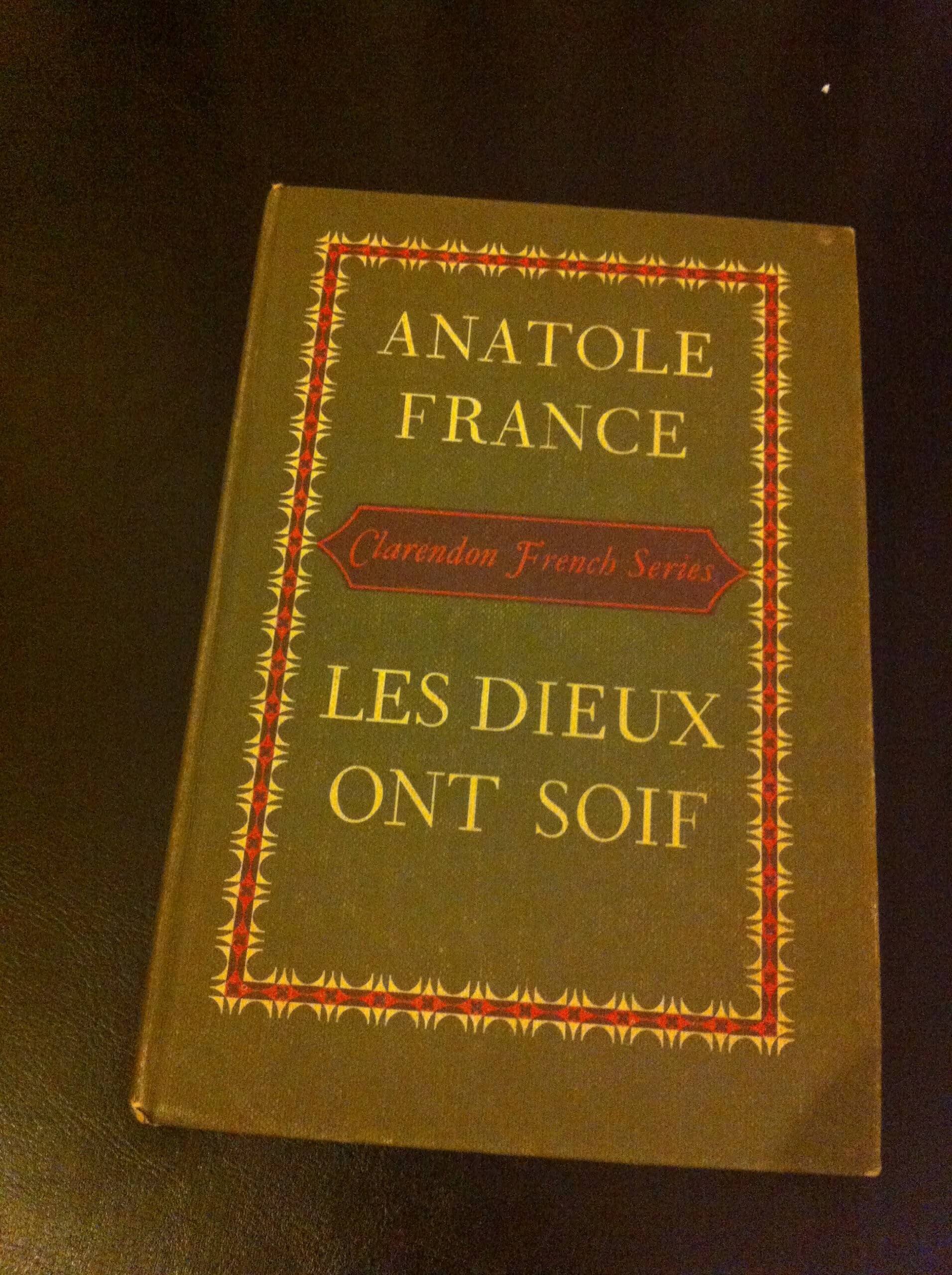
The story of the infernal rise of Évariste Gamelin, a young Parisian painter, involved in the section for his neighborhood of Pont-Neuf, The Gods Are Athirst describes the dark years of the Reign of Terror in Paris, from Year II to Year III. Fiercely Jacobin, Marat and Robespierre's most faithful adherent, Évariste Gamelin soon becomes a juror on the Revolutionary Tribunal.
Lumière d'août
Light in August, a novel that contrasts stark tragedy with hopeful perseverance in the face of mortality, features some of Faulkner’s most memorable characters: guileless, dauntless Lena Grove, in search of the father of her unborn child; Reverend Gail Hightower, a lonely outcast haunted by visions of Confederate glory; and Joe Christmas, a desperate, enigmatic drifter consumed by his mixed ancestry.
Le grand Meaulnes
In a small village in the Sologne, Fifteen-year-old François Seurel narrates the story of his relationship with seventeen-year-old Augustin Meaulnes. Impulsive, reckless and heroic, Meaulnes embodies the romantic ideal, the search for the unobtainable, and the mysterious world between childhood and adulthood.
Short Stories
One of the greatest French novelists, Balzac was also an accomplished writer of shorter fiction. This volume includes twelve of his finest short stories – many of which feature characters from his epic series of novels the Comédie Humaine. Compelling tales of acute social and psychological insight, they fully demonstrate the mastery of suspense and revelation that were the hallmarks of Balzac’s genius. In “The Atheist’s Mass,” we learn the true reason for a distinguished atheist surgeon’s attendance at religious services; “La Grande Breteche” describes the horrific truth behind the locked doors of a decaying country mansion, while “The Red Inn” relates a brutal tale of murder and betrayal. A fascinating counterpoint to the renowned novels, all the stories collected here stand by themselves as mesmerizing works by one of the finest writers of nineteenth-century France.
For more than seventy years, Penguin has been the leading publisher of classic literature in the English-speaking world. With more than 1,700 titles, Penguin Classics represents a global bookshelf of the best works throughout history and across genres and disciplines. Readers trust the series to provide authoritative texts enhanced by introductions and notes by distinguished scholars and contemporary authors, as well as up-to-date translations by award-winning translators.
Les possédés de la pleine lune
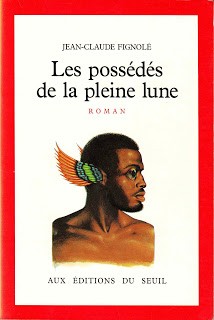
Jean-Claude Fignolé’s Les Possédés de la pleine lune begins and ends with death and madness, but is infused with humor and love throughout. A whirl of unresolved tension on the level of both form and content, the narrative unfolds in a spiral and does not lend itself to easy summarizing. Characters double and overlap, time collapses on itself, spaces alternate between the insular and the world, and language is at once pointed and wildly capacious. Fignolé leads the dance, of course, yet allows a tangle of other voices to reach the reader’s ear. The result is choral and chaotic—a moving but unromanticized portrait of a Haitian community in all its ambivalence and idiosyncrasy
Les Possédés de la pleine lune by Jean-Claude Fignolé (review). Available from: https://www.researchgate.net/publication/265974380_Les_Possedes_de_la_pleine_lune_by_Jean-Claude_Fignole_review [accessed May 23 2018].
L'île des pingouins
Une étude sur la genèse du roman
It is about a fictitious island, inhabited by great auks, that existed off the northern coast of Europe. The history begins when a wayward Christian missionary monk lands on the island and perceives the upright, unafraid auks as a sort of pre-Christian society of noble pagans. Mostly blind and somewhat deaf, having mistaken the animals for humans, he baptizes them. This causes a problem for The Lord, who normally only allows humans to be baptized. After consulting with saints and theologians in Heaven, He resolves the dilemma by converting the baptized birds to humans with only a few physical traces of their ornithological origin, and giving them each a soul.