Mes évasions
Provinciales
This is a pre-1923 historical reproduction that was curated for quality. Quality assurance was conducted on each of these books in an attempt to remove books with imperfections introduced by the digitization process. Though we have made best efforts - the books may have occasional errors that do not impede the reading experience. We believe this work is culturally important and have elected to bring the book back into print as part of our continuing commitment to the preservation of printed works worldwide
Angelo
This novella was what Giono wrote for practice as a character study of Angelo Pardi, his hero of the "Horseman on the Roof". He wanted to play around with how his character would respond in various situations. It may be playing but Giono's use of language is luxurious even in translation. Like a bath, with the water at the perfect temperature, I soaked it in as long as possible to whet my appetite (mixing my metaphors I know)before going on to "Horseman" which I started reading once 10 years ago. I have no idea why I stopped unless Giono's vivid powers of description got to be too much when he started describing cholera victims. "Angelo" is cholera-free but does also provide a warm-up to Pauline, the other central character in "Horseman". How Angelo would respond to Pauline is, I think, Giono's principle experiment in this short novel. It succeeded as far as I was concerned
Minuit
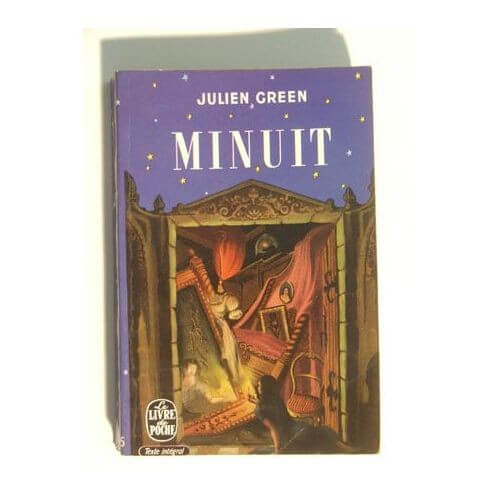
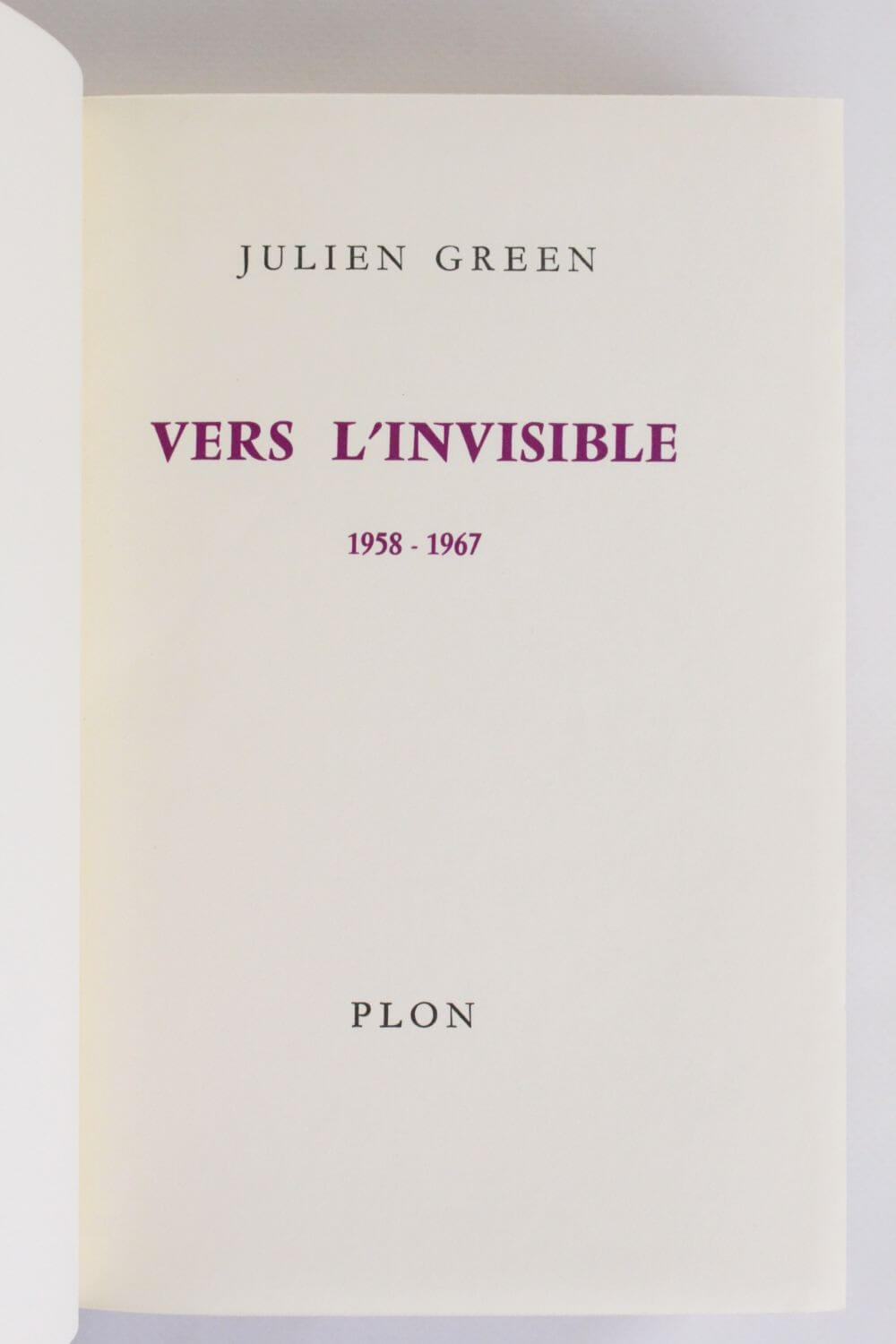
With Minuit (Midnight) and Le Visionnaire (The Dreamer) two years earlier Green's novels delved into a dreamlike world of battle between good and evil, passion and reason. While these novels picture French provincial life in critical light, some critics see them as more complex than the typical anti-bourgeoise novel. The psychology of evil and a sort of metaphysical boredom becomes the source of revolt, not social facts. In Midnight one finds a poetic evocation of the mystery of secrets in a dream. The author, in the preface, describes it as an answer to The Dreamer.
Declaration of war
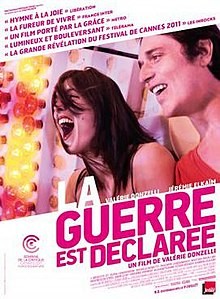
Based on real-life events experienced by filmmaker Valérie Donzelli and co-star/writer Jeremie Elkaïm, Declaration of war tells the powerful and life-affirming story of a young Parisian couple suddenly dragged from their carefree existence by an unexpected twist of fate, and their against-the-odds determination to defy it.
Beautiful Juliette and dashing Roméo are two insouciant souls whose electric first encounter and rapid storybook romance is quickly followed by the birth of a child. But their lives are transformed overnight when a visit to their pedatrician results in a stunning verdict: their infant son Adam is seriously ill.
As unexpected as this news is, Juliette and Romeo accept the battle head on, and with the support of their families, friends and dedicated
public healthcare workers (many playing themselves), end up revealing their strengths, weaknesses, fears and secrets to each other, as well
as the world.
Homeland
Home is where the heart is...
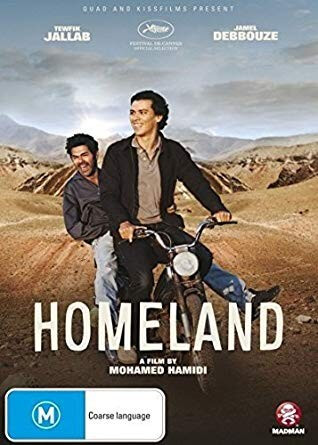
26-year-old law student Farid has lived in France his whole life. When his father falls ill and sends him to Algeria to try and save the family home from demolition, Farid discovers a country he neither understands nor cares for. In his father's village however, he is gradually won over by a gallery of extraordinary characters whose humour and straightforwardness take him by surprise. aMong them is his cousin, a quick-witted wheeler-dealer who dreams of somehow making it to France.
The two men travel together to the notorious party city of Oran to collect an important legal document, and after a riotous night of wild music and drunken partying, Farid wakes alone in his hotel room - his cousin and his passport have vanished...
Forced to remain in the village while he struggles with a suspicious and unhelpful Algerian bureaucracy, the young Frenchman begins to learn about his family's past and his own roots, and is startled to find himself wondering if this is in fact the home he has always wanted.
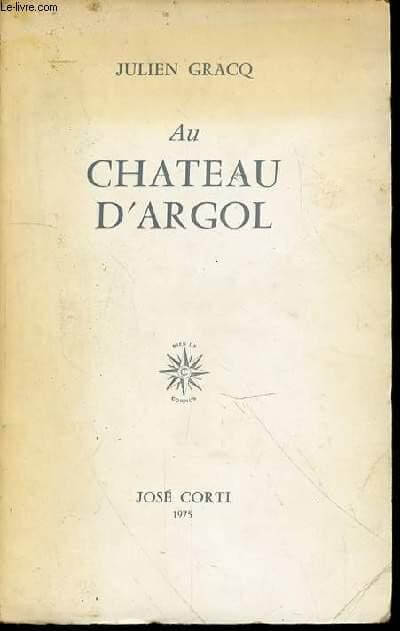
Au château d'Argol
A very mysterious and symbolic novel written by a master of the French language. A strange castle, two men and one woman, an intense atmosphere of intellectual stimulation and erotic attraction, and not one line of dialogue.
Un balcon en forêt
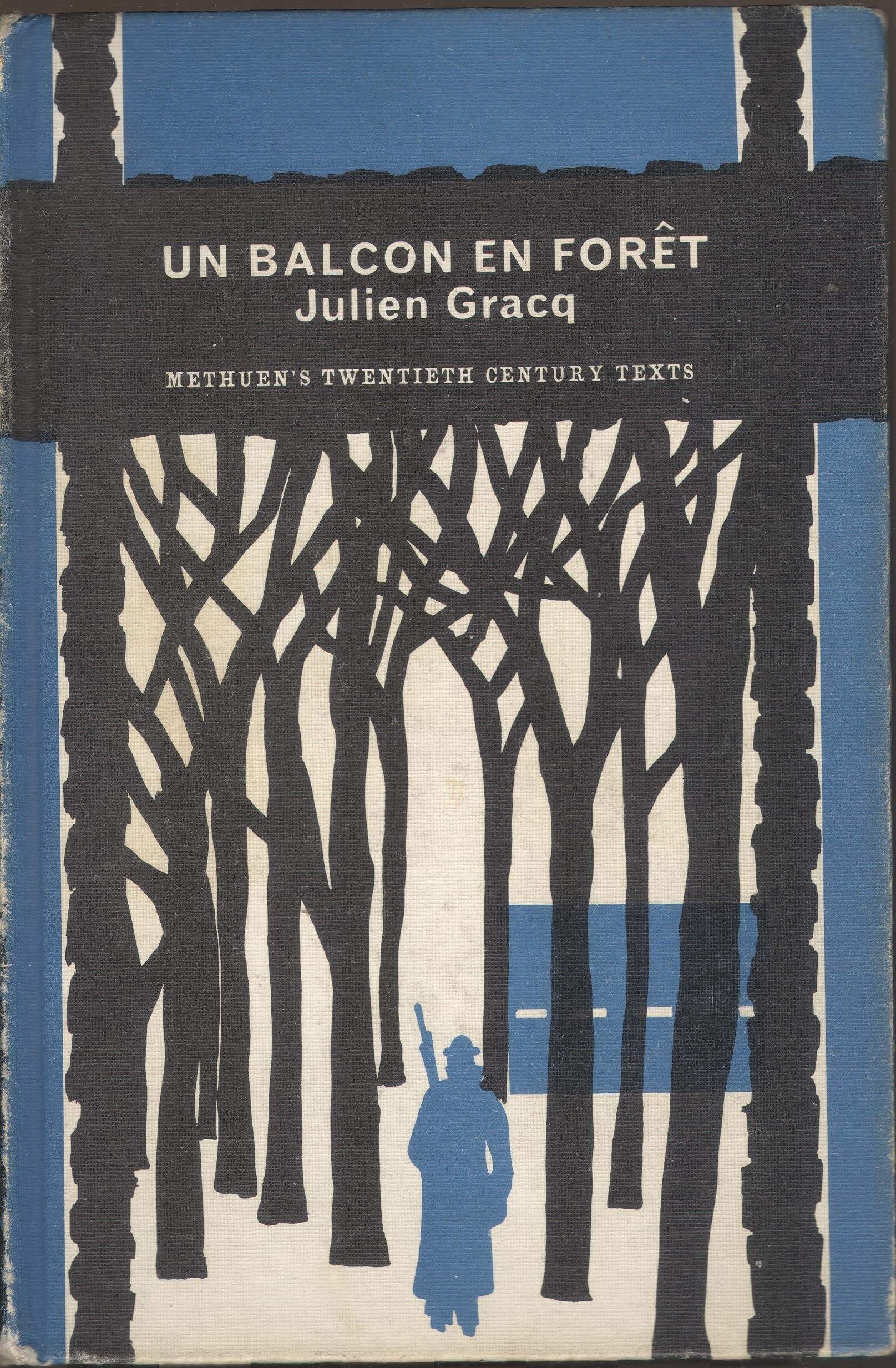
In the Ardennes Forest on the Belgian border the French guns point north-east, awaiting the German onslaught. One reinforced-concrete blockhouse in the heart of the forest is manned, this winter of 1939/40, by Lieutenant Grange with three men, who live in a chalet built over it. Cut off from the rest of the world, their senses heightened to capture the sounds and smells of the forest, the men create their own security as autumn turns to winter. Later, though, when winter turns to spring, when the sap rises and the panzer divisions attack, Lieutenant Grange meets the fate he has never believed he would escape. But if this is a story of soldiers, it is not about fighting. It is about solitude, about watching and waiting - and about love, the young Lieutenant's devotion to Mona, the child-widow discovered like a sprite in the forest one rainy night, who, in this surreal period of suspense, becomes his lover
Variations sauvages
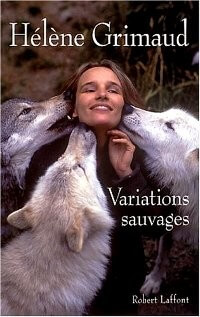
This book gives an insight on Grimaud's life, her intense focus and unique perspective of the world through the rich lens of music and literature. i found the format of the book a bit odd, as it was constantly jumping between recollections of her memories and seemingly disjointed anecdotes of wolf-centric history and mythology - the transitions there could probably have been smoother. in fact at some points it felt like it was two different books randomly spliced together. still, for an avid classical music lover, this was a fascinating read by a great pianist.
Journal à quatre mains
Those journals are written during the occupation in France, and because it says a lot about a woman's status and condition at the time. Some comparisons and descriptions are funny however, particularly the ones made by Benoîte. It takes you behind the scenes during WWII in a place where young girls are still thinking about passing their latin exams and about finding a male companion so their families can stop referring to them as spinsters
La femme sans passé
La touche étoile
The whole book is a delightful visit to the lives of a great feminist journalist that fought the 68's fights, her sister and her daughter (besides husbands and lovers), through the processes of aging, which invariably comes along with questions such as retirement, disease, empty nest syndrome and death of loved ones.
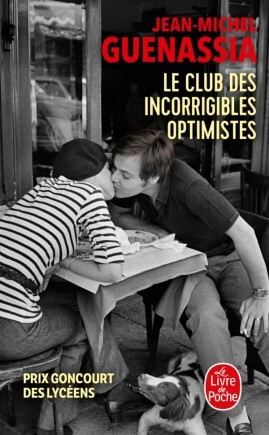
Le club des incorrigibles optimistes
Optimism is often considered a cure to sadness. The infallible key to happiness and well-being. Well, I think that’s hardly the case.
Whereas pessimism keeps a person locked in a permanent state of catatonic misery, optimism provides you -and that’s not a random choice of
verb- with a fierce melancholy that’s more heartbreaking than watching your favorite team lose the finals to their biggest rivals.
Optimism is the evening breeze that blows on a summer day and it’s the burning heat that sweeps the land at noon. It’s the NO that life
screams at you, whose destructive power can be experienced only if you’re a breathing, dreaming human being. Pessimism is comfortable.
Optimism is the opposite.
The Incorrigible Optimists Club begins and ends with a funeral. Not the same one, of course, but two very different ones. In
between, there is innocence, malice, books, childhood, adolescence, books, broken promises, broken homes, books, chess, revolution, books,
photography, music, Russians, exile, books, movies, dreams, friendship, love, romance, hate, grudge, books, life, death, cookies and
books. Although it’s really hard to put down, be warned, there’s an intense, lurking quality permeating the book, that creeps inside you
without you realizing it, and messes around with all it finds there. If it wasn’t a book, it would be the scarring moment when you hold
the person you love -summer breeze and all-, feeling the ultimate content and acknowledging the ruthless certainty that it’s only a moment
and, as is the case with all moments, it will pass and there’s nothing you can do about it. Simply put, it’s the very proof that there’s
nothing painless about being an optimist

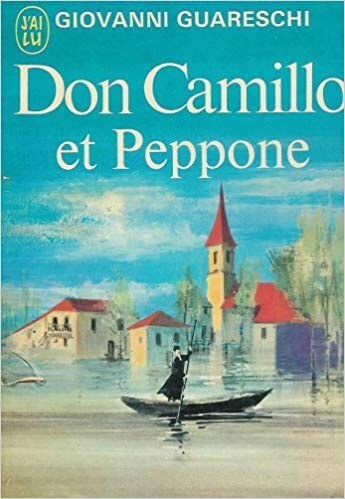
Don Camillo et Peppone
Don Camillo has been transferred to a new parish, where his old flock comes to visit. Coming back to his old parish, his conflict with his friend-rival Peppone is endless. Humor, faith and funny situations topping all incidents.
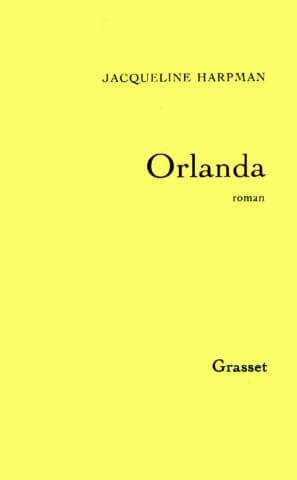
Orlanda
One afternoon in a Paris train station, as 35-year-old literature professor Aline Berger struggles to re-read Virginia Woolf's Orlando, a
novel she has never enjoyed, an odd feeling comes over her when a handsome but strange young man asks her for aspirin. Haunted by the
harsh words of her domineering mother, who demanded that she suppress her tomboyish tendencies during her childhood, Aline has become a
demure, passive, conventional woman. She fails to recognize the man standing before her, who the author names Orlanda. The body belongs to
that of Lucien Lèfrene, a lithe 20-year-old rock journalist, but it is inhabited by her once silenced spirit, and possesses her knowledge,
memories, and desires, including her love of men.
When the two meet again in Belgium, Aline subconsciously sheds her prim tendencies for more assertive behavior, as she begins to
understand that the audacious and lively Orlanda was born from her psyche. The more time the two spend together, the less time they can
stand to be apart.
Winner of the Prix Meacutedicis, this lyrical novel, which recalls the erudition and imagination of Michael Cunningham's The Hours, and
Patricia Duncker's Hallucinating Foucault, is a stunning evocation of a woman who is forced to confront every part of her soul, and
embrace herself whole
Shoe addicts
Helene Zaharis's politician husband keeps her on a tight leash and cancels her credit cards as a way of controlling her. Lorna Rafferty
is up to her eyeballs in debt and can't stop her addiction to Ebay. Sandra Vanderslice, battling agoraphobia, pays her shoe bills by
working as a phone sex operator. And Jocelyn Bowen is a nanny for the family from hell (who barely knows a sole from a heel but who will
do anything to get out of the house).
On Tuesday nights, these women meet to trade shoes, and, in the process, form friendships that will help them each triumph over their
problems—from secret pasts to blackmail, bankruptcy, and dating. Funny, emotional, and powerful, Shoe Addicts Anonymous is the
perfect read for any woman who has ever struggled to find the perfect fit
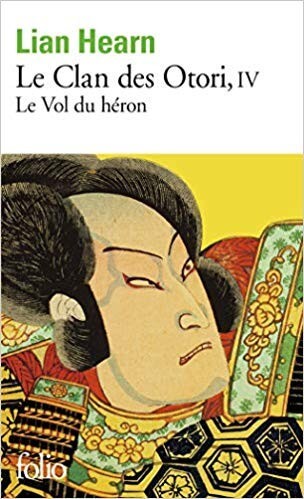
Le vol du héron
Le clan des Otori IV
The fourth book of this Shogunate-ish historical fantasy takes place a good fifteen years after the third book... just long enough for a
certain missing son to come back as per the previous prophesy to kill his father.
Oh, boy. Just in case we weren't sure this wasn't a nasty tragedy, we now have ample proof.
This novel brings a ton of new characters and a few of the old into the fold. A solid corner of the empire, a popular rule, and the
necessity to go see the emperor. The politics and the brutal necessities were very painful to me and I think I have decided to hate most
of these people based only on their treatment of shooting dogs - for sport - as a replacement for war... which eventually comes anyway.
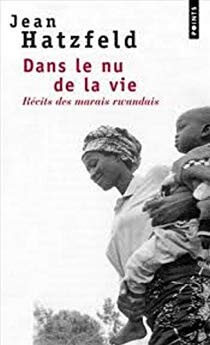
Dans le nu de la vie
Récits des marais rwandais
Life Laid Bare: The Survivors in Rwanda Speak introduced us to the Rwandan voices, the survivors of the Bugesera, men, women, children, all who ran from the blades for 100 days until the Tutsi army-- led by Paul Kagame, refugee turned General turned President--could reach the marshes and the hillside of the district. It is here that Hatzfeld first introduces the reader to the victims and survivors of evil.
Moi qui n'ai pas connu les hommes
This is an interesting, but somewhat frustrating read. It opens with our unnamed narrator – one of a group of women imprisoned in a bunker and guarded by men. The other women remember something of life before, but our narrator does not. In essence, her whole life has been spent as a prisoner.
Odyssée II
The Odyssey is literature's grandest evocation of everyman's journey though life. Odysseus' reliance on his wit and wiliness for survival in his encounters with divine and natural forces, during his ten-year voyage home to Ithaca after the Trojan War, is at once a timeless human story and an individual test of moral endurance.
L'aventure ambiguë
This book is about so much more than "a Senegalese man's experience in France." It is a philosophical exploration of the differences between Europe and Africa, White and Black, atheist and Muslim, materialism and mysticism. The narrator grows up feeling connected with the world, sensing the underlying unity of the spiritual and physical realms. His experience with the West exposes him to a new way of thought, one that is secure in its own superiority and values things only for their practical utility. The narrator brings his spiritual strength and philosophical understanding to bear on the challenge of integrating these two worldviews, to little success.
Dalva
From her home on the California coast, Dalva hears the broad silence of the Nebraska prairie where she was born and longs for the son she gave up for adoption years before. Beautiful, fearless, tormented, at forty-five she has lived a life of lovers and adventures. Now, Dalva begins a journey that will take her back to the bosom of her family, to the half-Sioux lover of her youth, and to a pioneering great-grandfather whose journals recount the bloody annihilation of the Plains Indians. On the way, she discovers a story that stretches from East to West, from the Civil War to Wounded Knee and Vietnam -- and finds the balm to heal her wild and wounded soul.
Les particules élémentaires
Bruno, the main character, has an extremely active libido, but is unfortunately not at all attractive; he's fat, ugly and lacks charm. He spends his days in a constant agony of unfulfilled desire. I recently read Hamsun's Hunger; the poor guy in Hamsun is broke and hungry, and no matter what he tries to think about he always comes back to money and food within a few minutes. Hamsun's very brave about showing how degrading this is for him. Bruno's plight is similar. He's not getting any sex, and that's all HE can think about. And in fact it's not unreasonable to argue that Houellebecq is being brave too in describing just how humiliating that is for him.
Extension du domaine de la lutte
The narrator, in this first book by Michel Houllebecq, is an unnamed person
does not find meaning in anything he does. At 30, he is still a virgin and so he frequently masturbates along in his apartment. Probably
because of this, he finds women as pure sexual objects or object of his masturbatory fantasies. Probably because of this, he has
difficulty relating to them. One day, he and his co-worker Tisserand are sent to Rouen to train users on a software. It
this there when twists to their empty lives happen that eventually lead to fatal death to one of them.
The prevalent mood of the book is bleak and sad. There are some funny moments because I always find humor in solitude, that's how weird I
sometimes get. Houellebecq's writing is sparse and edgy. Sometimes, his thoughts go everywhere, i.e., directionless but I supposed that he
is just trying to reflect to his readers the nature of the character.
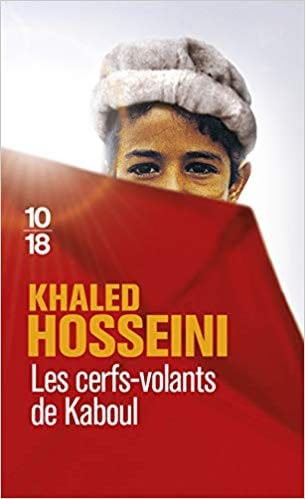
Les cerfs-volants de Kaboul
Amir is the son of a wealthy Kabul merchant, a member of the ruling caste of Pashtuns. Hassan, his servant and constant companion, is a
Hazara, a despised and impoverished caste. Their uncommon bond is torn by Amir's choice to abandon his friend amidst the increasing
ethnic, religious, and political tensions of the dying years of the Afghan monarchy, wrenching them far apart. But so strong is the bond
between the two boys that Amir journeys back to a distant world, to try to right past wrongs against the only true friend he ever had.
The unforgettable, heartbreaking story of the unlikely friendship between a wealthy boy and the son of his father’s servant, The Kite
Runner
is a beautifully crafted novel set in a country that is in the process of being destroyed. It is about the power of reading, the price of
betrayal, and the possibility of redemption; and an exploration of the power of fathers over sons—their love, their sacrifices, their lies.
A sweeping story of family, love, and friendship told against the devastating backdrop of the history of Afghanistan over the last thirty
years, The Kite Runner is an unusual and powerful novel that has become a beloved, one-of-a-kind classic
Ecrits politiques
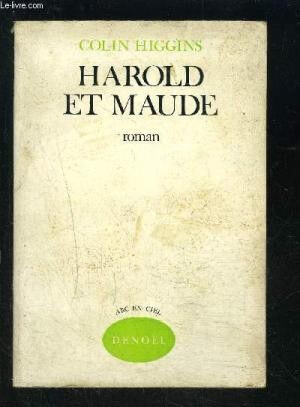
Harold et Maude
Nineteen-year-old Harold Chasen is obsessed with death. He fakes suicides to shock his self-obsessed mother, drives a customized Jaguar hearse, and attends funerals of complete strangers. Seventy-nine-year-old Maude Chardin, on the other hand, adores life. She liberates trees from city sidewalks and transplants them to the forest, paints smiles on the faces of church statues, and “borrows” cars to remind their owners that life is fleeting—here today, gone tomorrow! A chance meeting between the two turns into a madcap, whirlwind romance, and Harold learns that life is worth living. Harold and Maude started as Colin Higgins’ master’s thesis at UCLA Film School, and the script was purchased by Paramount. The film, directed by Hal Ashby, was released in 1971 and it bombed. But soon this quirky, dark comedy began being shown on college campuses and at midnight-movie theaters, and it gained a loyal cult following. This novelization was written by Higgins and published shortly after the film’s release but has been out of print for more than 30 years. Even fans who have seen the movie dozens of times will find this companion valuable, as it gives fresh elements to watch for and answers many of the film’s unresolved questions.